
More about: Venice in 7 Days: a guidebook for discovering the city in detail
There’s so much to do and so many places to see in Venice that planning a long trip to the city can be tricky. My advice is to spend a day in each district or neighbourhood, so you can explore it at a leisurely pace. You’ll be spending a whole week in the city of the gondolas, so you’ll have plenty of time to get to know both the main island and its surroundings.
Of course, there are iconic sights like St Mark’s Square and the Rialto Bridge that will feature prominently on your itinerary, but Venice has many other secrets, hidden corners and traditions waiting for you. Shall I tell you my favourites? To make things easier for you, I’ve put together what would be my perfect 7-day visit to Venice.
Day 1: Discover the surroundings and the art of St Mark’s Square
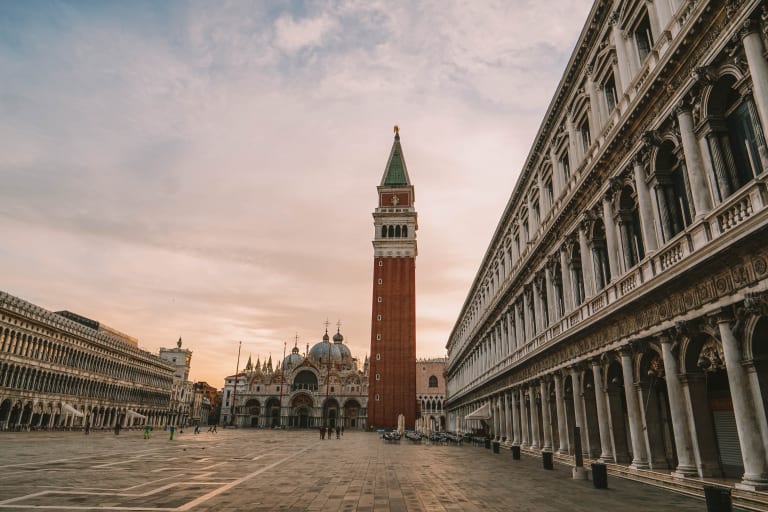
When you arrive in Venice from the airport and set off to explore its streets, you’ll soon realise that St Mark’s Square is the central hub. It is around this square that the life of the city unfolds, as its approximately 100 square metres are home to some of Venice’s most iconic buildings, such as the Doge’s Palace—for which you can book tickets in advance—or St Mark’s Basilica, for which you can also secure your tickets beforehand. Without a doubt, this square should be your first stop during your trip.
Feel like a doge at the Doge’s Palace
Your first stop should undoubtedly be the former Palace of the Doges, where the city’s rulers resided for years. Although tickets to visit the Doge’s Palace are somewhat pricey (from €40), they also include access to the Correr Museum, the Archaeological Museum and the Library, but it will be well worth it. If you’re into culture, you’ll love this visit, though I recommend booking your tickets in advance and, if possible, opting for the skip-the-line option, as queues can get quite long.
The interior of the Doge’s Palace is incredible and gives you a real sense of the luxury and decorative style of the Renaissance era. You’ll walk through such significant rooms as the former voting chambers or the armoury. As if that weren’t enough, from the Palace you can cross the famous Bridge of Sighs and reach the dungeons, where the famous Casanova was imprisoned.
Experience the art of St Mark’s Basilica
Before the morning ends, it’s the perfect time to visit another of St Mark’s Square’s iconic buildings: the Basilica. As soon as you step inside, you’ll be struck by its golden hue, which casts a special light and glow over every corner, and the altar, beneath which St Mark rests. If you go with a specialist guide – something I recommend as it allows you to skip the queues – they will explain each of the images in the wall mosaics.
Although entry to the Basilica is free, there are areas, such as the Museum and the Horses of St Mark, for which a separate admission fee applies (approximately €5). My advice is not to miss the chance to visit this room, which is where most of the mosaics are found, as well as the original sculptures of the horses, made of bronze and gold.
Listen to the twelve noon chimes from the heights

With a special ticket (approximately €10), you can climb the Basilica’s bell tower. Personally, I was captivated by the views of Venice from 100 metres up, so I recommend booking a ticket so you can see them too. As well as the panoramic views, if you’re on the roof at twelve o’clock (or any other hour on the hour), you’ll have an incredible vantage point to hear and see the two figures on St Mark’s Astronomical Clock strike the hour.
It might seem like something of little interest, as you can hear the clock’s bells from anywhere else in the city, but I assure you that observing the delicate artistry and detail with which the clock was designed and crafted is a real treat.
Stop for a bite to eat around St Mark’s
By lunchtime you’re bound to be hungry, and the truth is there are plenty of dining options around St Mark’s Basilica. Bear in mind, these are tourist and historic establishments, so be prepared to pay up to €10 for a drink. Even so, there are places I really liked and that’s why I want to recommend them to you.
After lunch, you simply must try a proper Venetian coffee, which is made with cream and is usually quite strong. In short, just what you need to recharge your batteries and carry on with your first day in Venice.
Discover the history of Venice at the Correr Museum

If you’ve bought a ticket for the Doge’s Palace, you should know that entry to the Correr Museum is included. Although there are many museums in Venice, this one in particular has always caught my attention. Why? Because as you walk through its galleries, you’ll take a journey through the history of Venice from its founding right up to the moment it was annexed by Italy.
A visit to the Correr Museum will give you a better understanding of the city’s key events, something I consider essential before continuing your visit to Venice. Furthermore, the Archaeological Museum is also housed within this building, where you can admire sculptures and other works of art dating back hundreds of years.
Watch the sunset during a cruise along the Grand Canal
The Grand Canal is undoubtedly the place to book a gondola ride. Aboard Venice’s quintessential mode of transport, you’ll discover the city’s history from your gondolier or a local guide. As you glide along, you’ll be able to admire buildings such as the Gothic mansion Ca’ d’Oro and pass beneath famous Venetian bridges like the Rialto.
If you book your gondola ride along the Grand Canal in the late afternoon, you’ll have the luxury of watching the sun set whilst you glide peacefully through the waters. This is undoubtedly the best way to round off your first day exploring Venice.
Day 2: Experience the vibrancy of the Dorsoduro district

They say it’s the favourite area for young people, but I think Dorsoduro can be enjoyed at any age, which is why I’d recommend spending a day exploring it. Along its streets, you’ll find not only the Gallerie dell’Accademia, but also some truly beautiful churches and palaces.
Take in all of Venice’s art at the Accademia Gallery
When you cross the Accademia Bridge – built of wood as it was originally intended to be temporary – one of the first places you’ll see is the Accademia Gallery. In this museum, which costs around €4, you’ll find the largest collection of Venetian art, featuring works by artists such as Bellini and Titian.
Did you know that this museum was founded in 1817 with the aim of housing all of Venice’s artworks? Well, yes, which is why a visit here is almost a must if you want to admire the more than 800 paintings on display.
Continue your artistic tour at the Peggy Guggenheim Collection
It’s clear that art plays an essential role in Venice, but don’t assume that all the works have centuries of history behind them. In fact, I recommend a visit to the Peggy Guggenheim Collection, located within the Palazzo Venier dei Leoni, where works by Picasso, Magritte and Pollock are on display.
If you love painting and enjoy modern art, this is an essential stop during your visit to Venice and the Dorsoduro district.
End the morning at the Church of Santa Maria della Salute
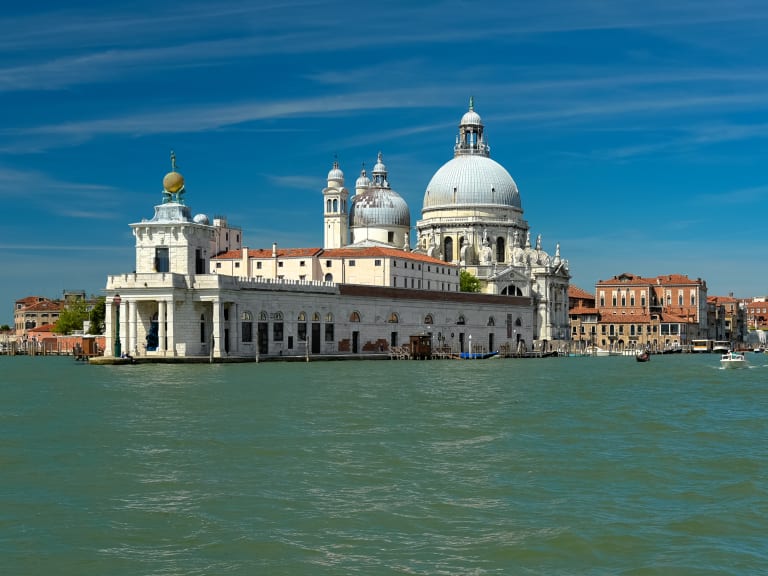
Upon arriving in the Dorsoduro district, I’m sure there’s one building that will catch your eye above all others: the Church of Santa Maria della Salute. Moreover, its dome will look familiar to you, as it features on most postcards of the city. This church is one of Venice’s most important religious buildings and was built to celebrate the end of the plague, so you can imagine the symbolism it holds. Entry costs around €4, so it’s quite affordable.
While its exterior alone will leave you speechless, I recommend going inside because the sacristy houses Tintoretto’s famous painting ‘The Wedding at Cana’, as well as other works by him and artists such as Titian.
Stop for a bite to eat and a shop
If there’s one lively square in Dorsoduro packed with shops and restaurants, it’s Campo Santa Margherita. It’s undoubtedly a magnificent spot for an aperitif or even to buy some fresh produce from the street stalls that set up there every morning.
But as well as the delicious food in Santa Margherita, sitting on one of its terraces you can admire the façades of the Baroque buildings that surround it; among these, I recommend paying special attention to the old Scuola dei Varoteri and the Scuola Grande dei Carmini, which you can visit if you’re interested by purchasing your tickets.
Visit the legendary Palazzo Ca' Rezzonico
It’s impossible to spend a day in Venice without seeing one of its palaces, but the great thing about Ca’ Rezzonico is that it’s one of the few you can actually visit inside. You’re bound to recognise its façade from photos, as it stands on the banks of the Grand Canal and is absolutely stunning.
Although, naturally, it’s smaller than the Doge’s Palace, it’s just as worth a visit, particularly as it houses the Museo del Settecento Veneziano, where you’ll find objects once used by the city’s nobility. You can also visit an old pharmacy.
Day 3: Explore the naval area of the Castello District

Of all Venice’s districts, Castello is the largest. To get there, you’ll need to take a vaporetto, so you’ve got the perfect excuse to try out this quintessential mode of transport. This neighbourhood combines the luxury and crowds of one of the city’s most touristy areas with the poorer streets around the shipyard.
Walk amongst the tombs of the Basilica of Santi Giovanni e Paolo
I’m quite sure what one of the first stops should be: the Basilica of Santi Giovanni e Paolo. Not only because it’s the largest church in Venice, but because artistically it’s a true icon. On the one hand, inside you’ll find the tombs of the doges, so you can imagine the rich decoration that accompanies the former Venetian dukes. The entrance fee is nominal (around €2) and is treated as a donation to the Basilica.
Once you’ve finished exploring the vast interior of the basilica, its tombs and works of art, I recommend heading out into the square of the same name. There you’ll find the statue of Bartolomeo Colleoni, an impressive Renaissance piece by the sculptor Verrocchio. The square is also home to the Scuola Grande di San Marco, another Renaissance building that is currently used as a hospital.
Visit the Naval Museum at the Arsenale Complex
Did you know that the site where the Venice Biennale was held years ago used to be a naval complex? That’s right, this was the purpose of the Arsenale, which explains why it now houses the Naval History Museum. This old shipyard is a highly recommended place to round off the morning by seeing the evolution of Venetian gondolas. Admission costs around €10 and, even if you’re not particularly interested, this is where warships were repaired and built.
Around the Arsenale you can also visit other historic buildings, but above all I recommend relaxing in the Gardens, which were designed by Napoleon Bonaparte. There you can escape the hustle and bustle of the city for a while.
Take a break to shop and eat at the market on Via Garibaldi

You’re probably starting to feel peckish, and at times like that there’s nothing like enjoying fresh produce bought straight from the market. The Garibaldi market is open on weekdays from early in the morning, although the stalls selling fruit, vegetables and other fresh produce start to close at midday. However, on this street—one of the widest and straightest in Venice—you can also find permanent eateries serving good-value food.
As well as grabbing a bite to eat, you can also do some shopping. Although it’s a fairly large and central street, the shops you’ll find there are mostly local, making it a great opportunity to pick up a more special souvenir.
Step back in time at the Acqua Alta Library
In recent years, technology has taken over our daily lives, so I recommend leaving your mobile devices in your rucksack for a while and losing yourself amongst the bookshelves of the Acqua Alta Library. The building is located in the heart of the Castello district and has a very special feature: sometimes the bookshelves are replaced by gondolas and bathtubs.
As you can imagine, when the floods hit Venice – a very common occurrence at certain times of the year – this bookshop turns into an indoor lagoon, and the best way to save its books is by placing them in bathtubs or gondolas. It sounds incredible, butif you visit Venice in winter and go to see it, you’ll be able to see for yourself.
Day 4: Stroll through the small San Polo district

The San Polo district is one of my favourites because of its beauty and the culture it embodies. This neighbourhood is the smallest in Venice, though also one of the oldest, as the city’s first inhabitants settled here because it was a flood-free area. You’ll find it near the Rialto Bridge.
Cross the Rialto Bridge towards the market
It was clear this would be one of my top recommended stops, as this famous bridge is well worth crossing at least once. As well as being one of the most distinctive, the Rialto is the oldest of the four bridges spanning the Grand Canal. It is characterised by its distinctive portico and, historically, by having been an economic hub.
Once you’ve crossed the bridge, if you do so in the morning, you’ll have the chance to visit the Rialto Market, which has been held since the early 11th century. If you haven’t had breakfast yet, you’ll find it hard to resist the temptation when you see how delicious the fruit on sale there looks.
Near this bridge is the Palazzo Mocenigo, an 18th-century nobleman’s house turned museum where you can discover a collection of period clothing and accessories, as well as Rococo-style furniture and frescoes.
Step inside Santa Maria Gloriosa dei Frari and explore its interior
Once you’ve made your way deep into San Polo, head to the Frari, the name given to this church which, from the outside, is rather deceptive. What do I mean by that? Well, its exterior is rather dull, with little ornamentation. However, when you step inside (admission costs around €3), you’ll be pleasantly surprised.
One of the most striking features is the stained-glass work adorning the walls of Santa Maria Gloriosa, although the star of the show is undoubtedly Titian’s painting of ‘The Assumption’, which presides over the altar.
Gather your strength and visit the Scuola Grande di San Rocco

After a quick stop for lunch at one of the rustic taverns you’ll find in the San Polo district, it’s time to continue your Venetian art tour at San Rocco, which is every bit as impressive as the Sistine Chapel. Why? Its interior was decorated by Tintoretto, so get ready to admire a masterpiece brimming with colour, light and detail.
There’s just one drawback: although the building is quite large and its architecture impressive, only three rooms are open to visitors. Even so, if, like me, you love art, I highly recommend popping in (the approximate ticket price is €10).
Enjoy a Venetian evening with a traditional dinner
The whole area around the Rialto Bridge is one of the most traditional in Venice, so I can’t give you better advice than to make the most of being there by booking a food tour that lets you sample the city’s most typical dishes, hear legends and get to know Venice’s nightlife too.
During the three hours or so that these tours last, you’ll visit small bars where you’ll be able to sample some ‘cicchetti’ – small portions of fish, meat or vegetable dishes. Of course, food goes down better with a few glasses of wine, so you’ll also get to taste some of Venice’s finest wines.
The best part is that when you book this type of tour in Venice, you’ll be accompanied by a professional guide who, as well as taking you on the food tastings, will share the city’s secrets and legends with you.
Day 5: Discover the best viewpoint on the Island of San Giorgio

This district is actually an island, but it has three spots that immediately caught my interest and I’m sure they will yours too. Firstly, on San Giorgio Maggiore there is a monastery and a church that are well worth a visit. But what’s more, from this island you’ll have incredible views of Venice.
The grandeur of the Basilica of San Giorgio Maggiore
This massive building catches the eye from afar, as it can be spotted from St Mark’s Square. Once you’re on the island, it’s even more imposing. Its marble structure was designed by Andrea Palladio and blends various classical styles, though its inspiration is mainly Roman.
I’ve already told you that the exterior is fascinating, but inside you’ll also find plenty of art, specifically several works of Italian Mannerism. My advice is not to forget to admire these pieces, even if your main aim is to climb to the top of the bell tower, from where you’ll enjoy an incredible panoramic view of Venice. The photos you’ll take from there are priceless, believe me, and will make the roughly €6 entrance fee well worth it. After all, there’s a reason why they say this is the best viewpoint in the city.
Take a vaporetto and visit the island of Giudecca
Venice is a large island, but there are other equally interesting, albeit smaller, islands surrounding it. Giudecca is one of them, so I recommend taking vaporetto number 2, which takes you there from San Giorgio, and spending the afternoon visiting two of its most important buildings: the Convent of the Zitelle and the Church of the Santissimo Redentore.
The Convent of the Zitelle has a rich history, having been built to shelter women in need. It is now a hotel, but the name has been retained. Meanwhile, the Church of the Santissimo Redentore was designed by Andrea Palladio as a reminder of the terror caused by the plague in the city, which was considered a divine punishment. Its architecture is notable for its imposing Roman pediment.
Day 6: Take a day trip to Murano, Burano and Torcello

If you’re spending a week in Venice, I recommend taking a day trip from Venice, particularly to the area of Murano, Burano and Torcello, three nearby islands where you can experience some of the most traditional crafts first-hand.
Learn the art of glassblowing on the island of Murano
Have you ever been fascinated by watching glass being made? Using just air, master craftsmen design glass objects with seemingly impossible shapes. During your visit to Murano, you’ll have the chance to visit an old factory to watch a live demonstration of this craft. If you also book a tour that includes a workshop, you’ll return with a piece you’ve made yourself, thanks to the guidance of the glassblower and the guide accompanying you.
In Murano, you can also visit the Cathedral of Santa Maria and San Donato, a Byzantine-style building that forms part of the city’s heritage. My advice is to go with a guide who can explain all the references and allegories that the floor and wall mosaics make to religious motifs.
Visit the fishing village on the island of Burano
This island is known for its handmade lace, but also for being a charming fishing village. As you can imagine, the quality of the fish in Burano is excellent, so I recommend making the most of your visit by sitting down at a restaurant in the harbour and savouring the local produce.
Once you’ve regained your strength after lunch, wander through its streets lined with colourful little houses and head towards its bell tower, which you’ll recognise instantly as it’s slightly leaning. Don’t worry, there’s no danger of it falling over as its structure was stabilised after the Second World War.
Explore the former seat of the Huns on the island of Torcello
Although only around 20,000 people live there now, Torcello was actually the first inhabited island and therefore boasts Venice’s first church, the Church of Santa Fosca. The reason there aren’t so many people there now is that, hundreds of years ago, a malaria epidemic caused the population to decline and power shifted to Venice.
Although its importance is no longer what it once was, in Torcello you can get a sense of what the area was like years ago, as it seems as though time has stood still. In fact, in the town square stands what is believed to have been the throne of Attila, King of the Huns.
In a couple of hours you’ll have explored Torcello and be more than ready to head back to Venice.
Day 7: Take a trip to the Lido of Venice
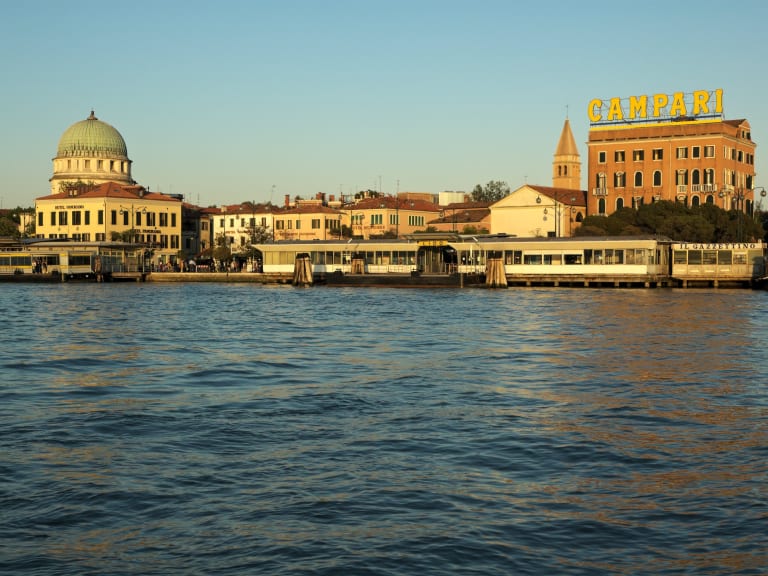
On your trip to Venice, you’re sure to love seeing the city’s most traditional areas, but if I may offer a piece of advice, you can’t leave without visiting the Lido – one of the area’s most fashionable summer destinations. This island is just a 10-minute vaporetto ride from Venice (lines 5.1 and .1), making it the perfect place to spend your last day in the city.
Take a stroll along the beaches of the Lido
If you’re heading to Venice in the summer, there’s no better way to enjoy the season and beat the heat than with a dip at the Lido’s beaches. My favourite (and that of many others) is Alberoni Beach, with its impressive dunes. If you’re travelling to Venice with children, a stroll and a swim at this beach is a brilliant idea.
Bear in mind, these beaches get very crowded, so take this into account when you go, as you’re likely to find lots of Italians spending their holidays there, as well as tourists like you and me. My advice is to go first thing in the morning.
Feel like a film star in the north of the Lido
You’ve no doubt heard of the Venice Film Festival, and images of big-name film stars arriving by speedboat probably spring to mind. Well, you can have a similar experience if you head to the Palazzo del Cinema, which is where this event is held every year. If you’re visiting Venice in August or September, bear in mind that this is when the festival takes place, so access may be restricted.
If the glamour of the cinema isn’t your thing and you prefer something more traditional, pop over to the San Nicoló district, also in the north of the Lido. There you can visit the monastery and the church, where the relics of Saint Nicholas are kept, though you may be more familiar with it as the location where the film Death in Venice was filmed.
Savour the best fish on the Lido
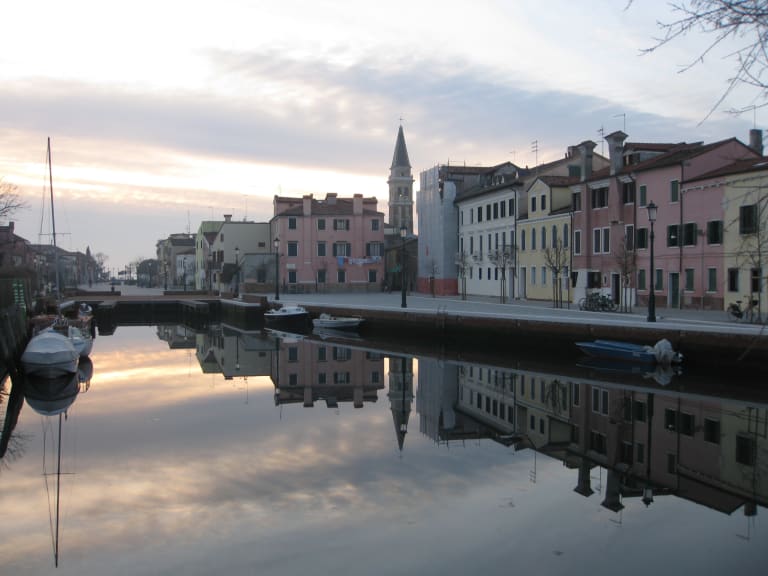
In the centre of the Lido lies Malamocco, a small fishing village where I recommend stopping for lunch. Of course, the star dish at any of the local restaurants is fish, though you can also try more typical dishes such as pizza.
Malamocco is one of the most authentic areas of the Lido, so the best thing to do is stroll through its streets and soak up the peaceful atmosphere. On your walk, you’re sure to be struck by the houses and buildings, which have a unique yet charming style.
Cycle along the murazzi
Fancy a bit of exercise? On the Lido, you can hire a bike to cycle along the murazzi – the barriers built to prevent the island’s erosion and ensure safe navigation through its waters.
Without a doubt, cycling is a great way to explore the Lido, and as you ride along the murazzi, you’ll have the chance to see the waves of the Adriatic Sea on one side and the town centre on the other. You’ll feel like a true Italian!
Dine and gamble at the Venice Casino
Fancy experiencing the glamour and sophistication of the Lido from the inside? Then you have to visit the Venice Casino. Mind you, if you do, remember to dress for the occasion, as there’s a dress code and they won’t let you in if you’re wearing beachwear. Even if you don’t gamble, the interior is quite spectacular, so my advice is to go in to soak up the atmosphere and, if you can afford it, have dinner there.
The Casino’s restaurants, as you’d expect, are absolutely luxurious, and you can enjoy top-class dishes there. It’s not for every budget, but you can at least have a drink and admire the décor, which is full of crystal chandeliers.
And to get around as quickly and safely as possible, it’s best to get a city travel pass, which will allow you to move freely around Venice without any hassle. You can choose the times that suit you best and travel unlimitedly on the vaporetto and buses.
How keen are you to spend a week in Venice? I hope these tips and the full itinerary help you organise your holiday in the city of gondolas. Enjoy it!