







More about: 4 Days in Rome
Four days in Rome is the perfect amount of time to see all of its main monuments and squares, but it will also give you time to discover its most interesting hidden corners. Here is the perfect itinerary for spending four days in Rome and not missing any of its must-see sights.
Day 1: Discover Ancient Rome
On your first day in Rome, you will see the city's most monumental sights, the impressive buildings that have been preserved since ancient times, and take a stroll through the Jewish Quarter, one of the most interesting in Europe.
Start the morning with a visit to the Colosseum
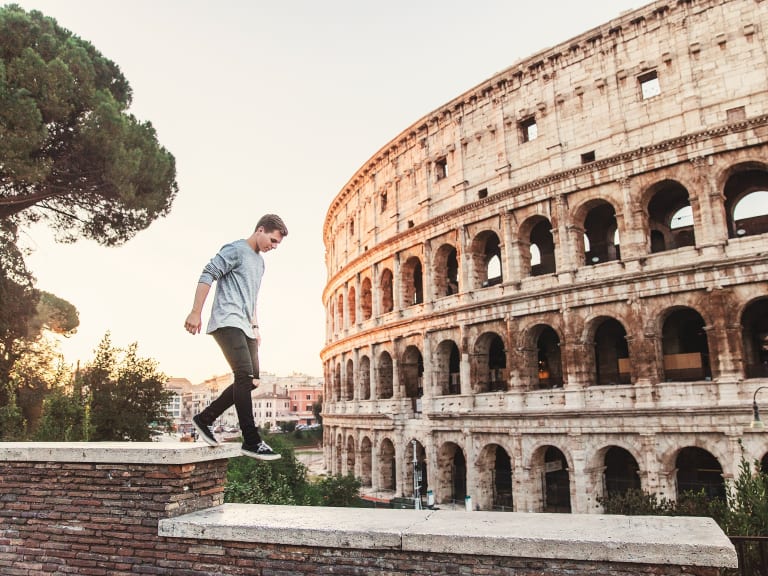
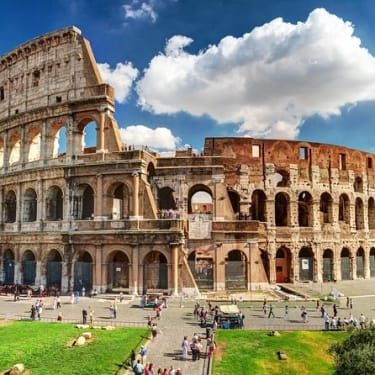
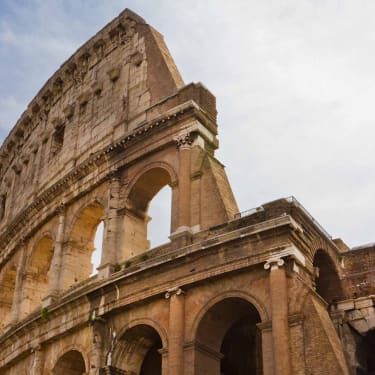
What better way to start your trip to Rome than by visiting the Colosseum, one of the seven wonders of the world?
Inside the Colosseum, you will see ancient history in its purest form: the most important place in Roman public life during the Empire, where free citizens exercised their right to entertainment, something that today seems ahead of its time.
To avoid the queues that form at the building, I recommend buying your tickets for the Colosseum, the Roman Forum and the Palatine Hill online. And if you are particularly passionate about history, it might be a good idea to take a guided tour of the Colosseum, which also includes the Roman Forum and the Palatine Hill.
Continue on to the Roman Forum and Palatine Hill

This place, very close to the Colosseum, is an open-air museum of ancient Roman ruins. From senate houses to public squares, markets and palaces, this area is an archaeological and historical treasure trove.
Don't forget to book your tickets to the Forum and Palatine Hill in advance. The Roman Forum is located on the Palatine Hill, one of the seven hills of Rome, and there are two ways to enter: either through the gate next to the Colosseum, which usually has a longer queue, or through Via di San Gregorio, although this involves a bit of a detour. If you're not in a hurry, it's best to queue.
You can also take a combined tour of the Colosseum and the Roman Forum. It will be an exciting experience that will reveal all the secrets that you might not notice at first glance, but it is more than enough to walk through these ruins and imagine everyday life in ancient times. If you are left wanting to see more ruins from the Roman Empire, there are other forums in Rome where you can walk through history, not far from the Roman Forum and with free access:
- The Imperial Forum.
- The Forum of Augustus.
- Caesar's Forum.
Afterwards, head to Piazza del Campidoglio and Piazza Venezia
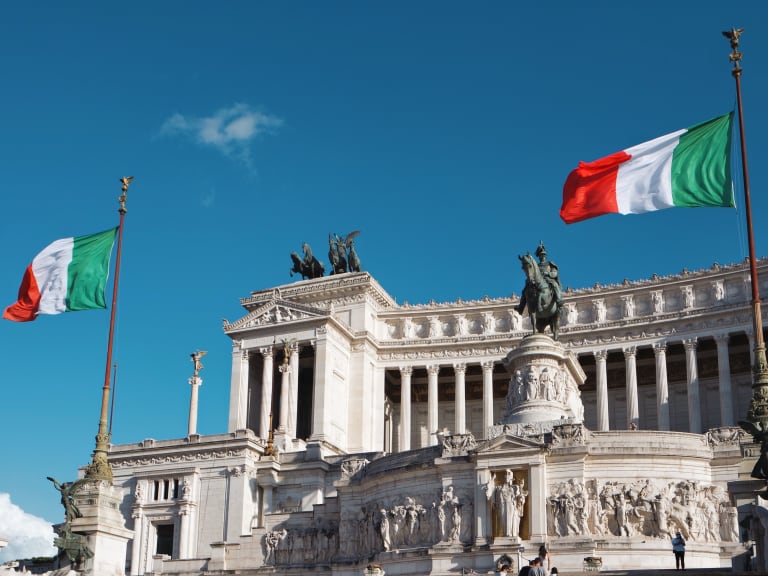
Piazza del Campidoglio is one of my favourite squares in Rome. You can even book a tour of Rome's fountains and squares.
Its oval shape, designed by none other than Michelangelo, and the beautiful buildings that surround it make this square a special place to sit, relax and enjoy Rome for a while.
On the way to Piazza del Campidoglio, you will pass Piazza Venezia, with its impressive national monument to Victor Emmanuel II (or Altar of the Fatherland).
Next, discover Campo de' Fiori

A quarter of an hour's walk from Piazza del Campidoglio you will find Piazza Campo de' Fiori, very popular with tourists, where every morning except Sundays you will find a market with all kinds of stalls: food products, fruit and vegetables and even bakeries.
If you are interested, you can book a tour of Rome's fountains and squares. You can also visit it if you book a gastronomic tour of Campo dei Fori
Another option is to continue on to Largo di Torre Argentina and order something to take away at Mercerie, at Via di S. Nicola de' Cesarini, 5, a very fashionable place in Rome where you can order delicious filled baskets to take away.
Don't miss Largo di Torre Argentina

This set of ruins is visited for two very different reasons. It is the place where Julius Caesar was assassinated, making Largo di Torre Argentina a top attraction for history buffs, but it is also a refuge for stray cats, so if you love cats, you have to come here.
The ruins are located outdoors, in the middle of a square, and are the remains of several temples from ancient times, as well as what remains of Pompey's Curia, the Roman Senate, where the famous assassination of the historical figure Julius Caesar took place.
In the afternoon, venture into the Jewish Quarter

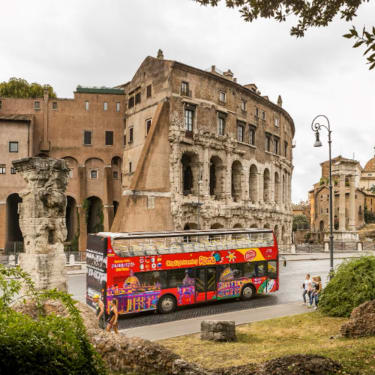
If you book a tour of the Jewish quarter, you will enjoy a very peaceful place where you can breathe an atmosphere that is somewhat different from the rest of the city. You will walk through its small streets and arrive at the Great Synagogue of Rome, see the Theatre of Marcellus, the little brother of the Colosseum, admire the historic Portico of Octavia and visit the charming Piazza Mattei with its Turtle Fountain.
While you're there, I recommend trying the Jewish-style artichokes, a dish of fried artichokes that is very characteristic of this neighbourhood.
And for dinner, a place that is quite good and frequented by many locals is Giggetto al Portico d'Ottavia, at Via del Portico D'Ottavia 21/a-22, where you can order the typical artichoke dish, but also excellent pasta and meat dishes.
Day 2: Discover the historic centre
On your second day in Rome, I recommend some essential plans such as visiting Piazza del Popolo, going to the Borghese Gallery, seeing Piazza di Spagna, going to the Trevi Fountain and, of course, visiting the Pantheon.
Visit Piazza del Popolo
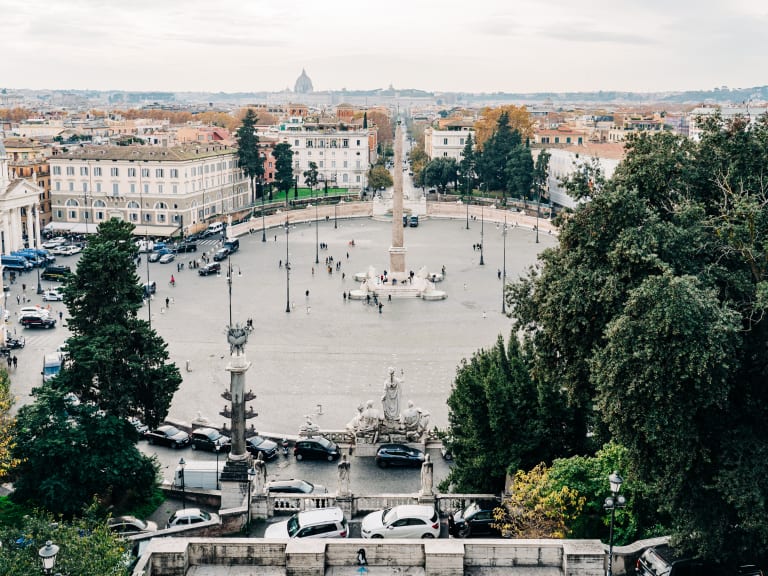
Piazza del Popolo is another of my favourite places in Rome, with the Flaminio Obelisk in the centre (which was originally located in the Circus Maximus)
In addition to its three churches, Santa Maria dei Miracoli, Santa Maria in Montesanto and the Church of Santa Maria del Popolo, which are well worth visiting, next to Piazza del Popolo is the Pincio Terrace, where you can climb up to enjoy beautiful views of the square and Rome.
Be dazzled by the Borghese Gallery
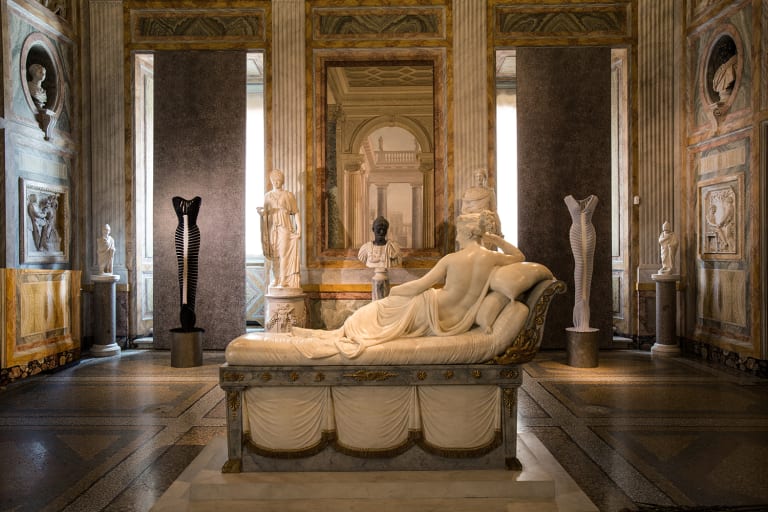
From Piazza del Popolo, it is a short walk through the Borghese Gardens to the art gallery of the same name, the Borghese Gallery, which houses one of the most important collections of pictorial art in Italy.
Located in an old palace, the Borghese Gallery is absolutely stunning and well worth a visit, especially if you are passionate about art. You can see paintings by Caravaggio, Raphael, and Titian, among other masters.
It is best to book your guided tour of the Borghese Gallery online to ensure you don't miss out and to make the most of your visit with an expert guide.
Visit the Spanish Steps
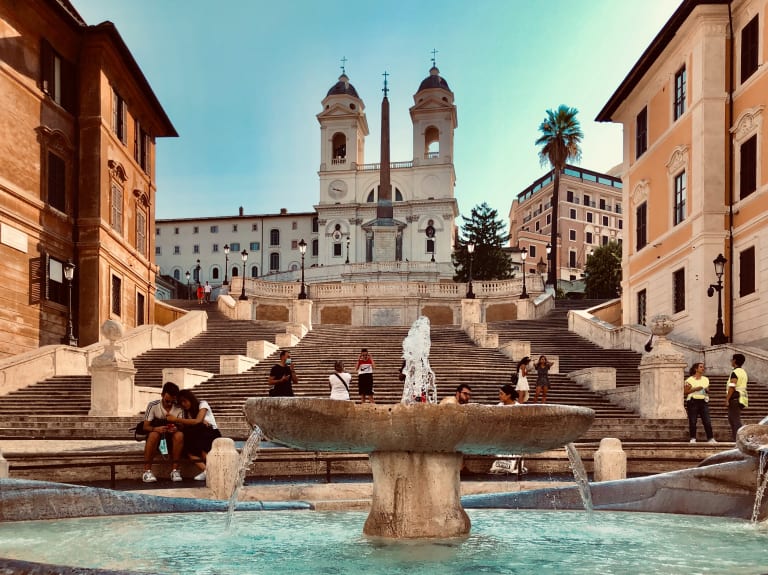
After visiting the Borghese Gallery, spend the rest of the day seeing Rome's most iconic sights and tourist attractions that you simply cannot miss on this trip.
We start with the famous Piazza di Spagna, whose staircase, full of flowers in summer in Rome, is always crowded with people.
The staircase is dominated by the beautiful Church of Trinità dei Monti, and the square is home to the iconic Fontana della Barcaccia. This square was a place of worship for the Romantic poets Keats and Percy Shelley. In fact, Keats' residence, now a museum, is located in the square itself.
Take the best photos at the Trevi Fountain
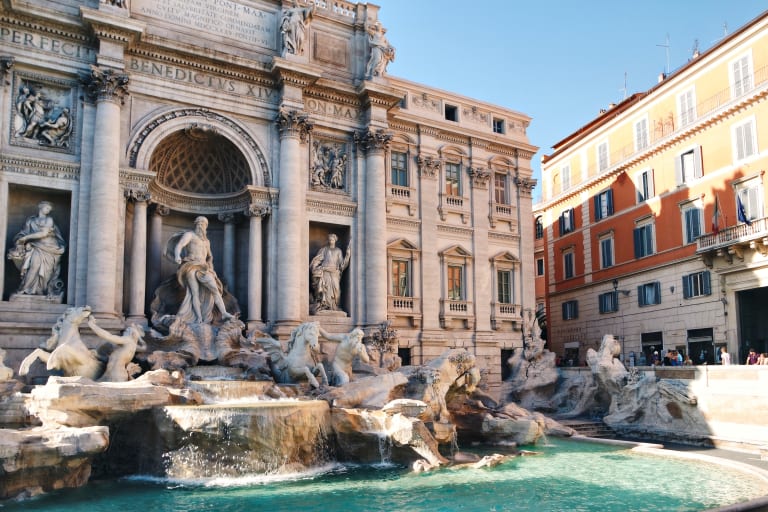
You cannot leave Rome without visiting the Fontana di Trevi. It is the most impressive and beautiful fountain in Rome and probably in the whole world. It has unrivalled beauty and you can visit it if you book the tour of Rome's fountains and squares.
Whether for its majestic beauty, for having served as an iconic setting in 'La Dolce Vita' or for the tradition of throwing coins into the water, you will find a huge crowd of people at this fountain. Therefore, it may be a good idea to return either at dawn or after midnight, two magical moments when you will find far fewer people and can enjoy the essence of the Trevi Fountain in all its splendour.
One of the most beautiful fountains in Rome that you cannot miss. If you are going to throw a coin into the water, remember the tradition: you must do so with your right hand over your left shoulder, and throw one coin to return to Rome, two coins to find love in Italy and three coins to invoke good luck in your marriage or divorce.
Start the afternoon at the Sciarra Gallery
Just a five-minute walk from the Trevi Fountain is this gallery with a small courtyard where you can see Art Nouveau frescoes and take a break from the crowds, as it is not a place well known to tourists.
It is one of those secret places in Rome that you will love to discover on your trip. Make a note of it in your diary!
Be amazed at the Pantheon
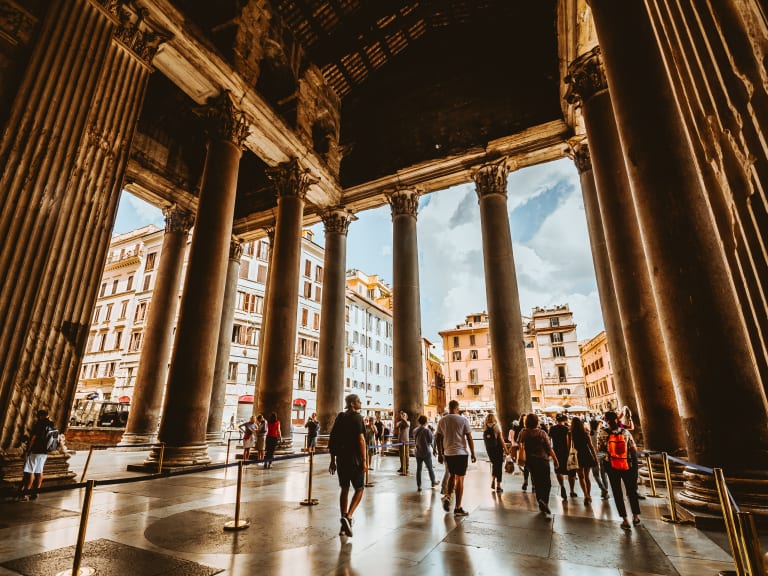
The Pantheon, now known as the Church of Santa Maria Rotonda, is a place full of mystery: preserved since ancient times, it survived the barbarian invasions and in the 7th century became an important Catholic temple.
Personally, I consider it essential to book a guided tour of the Pantheon on your trip to Rome and marvel at this monument both inside and out. An almost magical atmosphere reigns through the oculus of the great dome that lets sunlight into the interior. Here, you can see the tombs of several Roman monarchs and the tomb of the artist Raphael, as well as mosaics and sculptures with a special glow.
Visit Piazza Navona
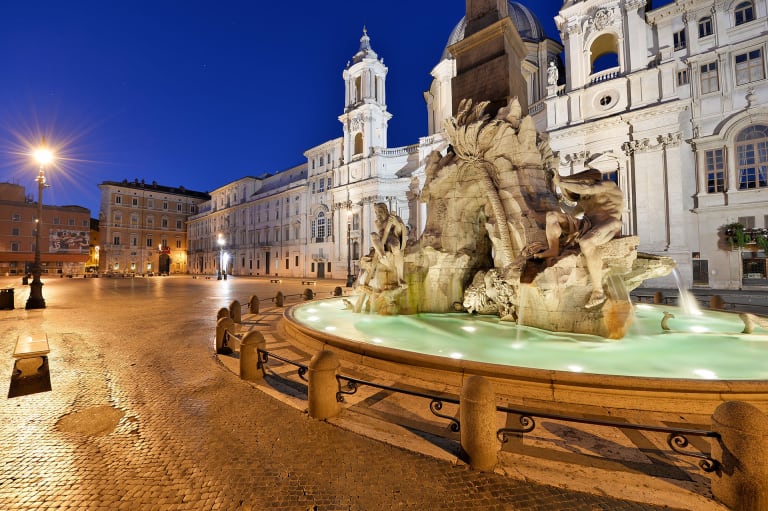
One of the most beautiful and popular squares in Rome since ancient times, when this space was the Stadium of Domitian, is Piazza Navona, a thousand-year-old place whose current beauty is largely due to the renovations of the Baroque period, which created the three fountains in the square and the church of Sant'Agnese in Agone.
This is a place that is definitely worth visiting on a four-day itinerary in Rome, where you can sit down for a coffee, relax and enjoy the atmosphere. You can also take the opportunity to book tickets for the underground passages of Piazza Navona.
End the day at Castel Sant'Angelo
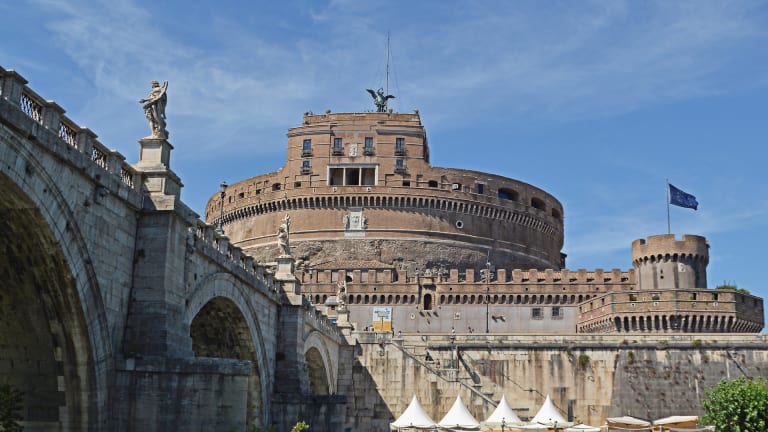
A walk from Piazza Navona to Castel Sant'Angelo will take you through the historic centre to one of the most beautiful bridges in Rome.
Booking tickets for Castel Sant'Angelo is an essential part of your trip to Rome. Its construction dates back to the 2nd century, when Emperor Hadrian ordered Castel Sant'Angelo to be built as a mausoleum for his family. Throughout its nearly two thousand years of history, this building has served as a tomb, a fortress for the Pope in case of attack, a castle and, in our day, a museum.
You can visit Hadrian's mausoleum inside and tour the papal apartments and look out over Rome from the defensive bastions, where the cannons still stand. To prepare for your visit, I recommend reading this article, in which I tell you everything you need to know about tickets and visits to Castel Sant'Angelo in Rome.
Day 3: Marvel at the Vatican and enjoy the afternoon in Trastevere
And for your third day, add a visit to the Vatican Museums, visit St. Peter's Basilica, stroll through Trastevere and watch the sunset from the Gianicolo viewpoint.
Start the morning at the Vatican Museums
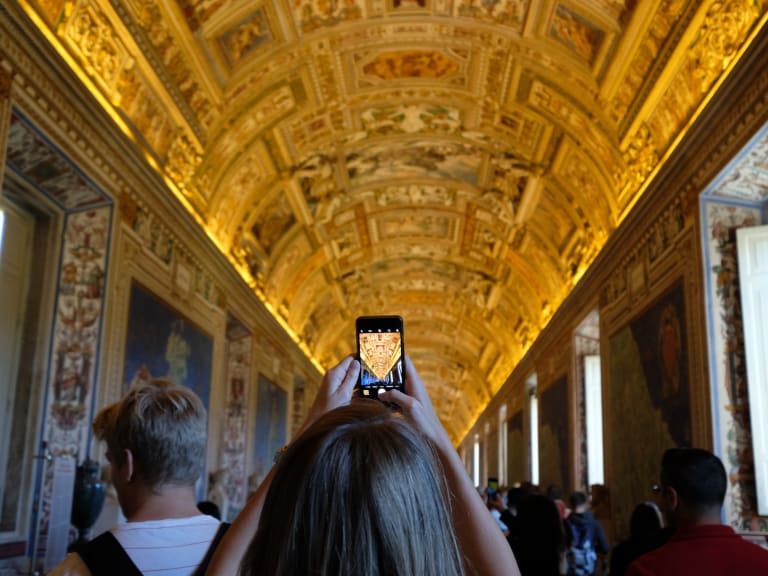
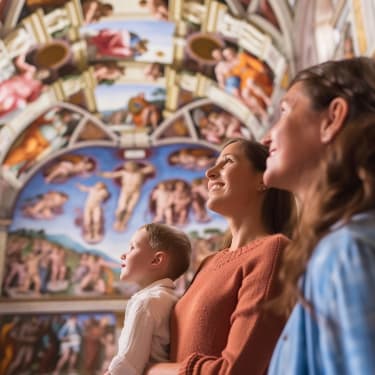
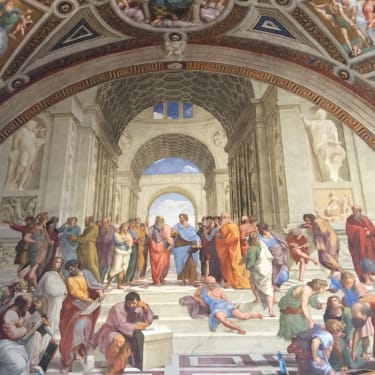
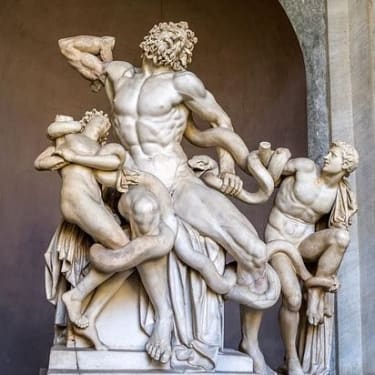
The Vatican Museums are an artistic treasure trove that houses gems such as the Sistine Chapel, the Hall of Maps, the Vatican Pinacoteca and many more attractions. Forget about trying to visit the Vatican Museums without planning ahead:
- you'll need to buy your tickets for the Vatican Museums and the Sistine Chapel in advance to avoid the queues.
- I recommend taking a guided tour of the Vatican Museums first thing in the morning, which will allow you to enter the Vatican before it opens to the public and explore its rooms in a small group, without having to endure the crowds of visitors who flock to this museum every day. You won't regret the early start when you arrive at the Sistine Chapel, as you'll be able to see it in complete tranquillity.
When planning your itinerary, bear in mind that the Vatican Museums are closed on Sundays except for the last Sunday of each month (a day I do not recommend at all, as admission is free and the queues are indescribable).
Don't miss St. Peter's Basilica

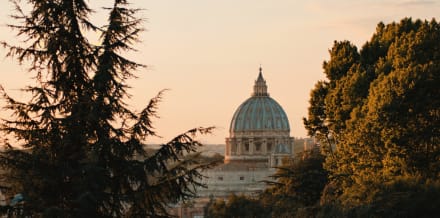
St. Peter's Basilica is, without a doubt, the most impressive church I have ever seen on all my travels. Just the sight that rises up in front of you as you enter Piazza San Pietro is one of the images you will find most difficult to forget from your entire trip to Rome, but inside you will find a work of art that you can explore and experience, and if all this were not enough, you can climb to the dome of the basilica and admire the whole of Rome at your feet.
Admission to St. Peter's Basilica is free, but you will have to queue, which is not a big problem on a four-day trip. In reality, the queue moves quite quickly, even if it doesn't seem like it. But why wait in line? You have the option of booking a guided tour of St. Peter's Basilica.
Pay special attention to the Baldacchino, Michelangelo's Pietà, the tomb of Alexander VII and the Vatican Grottoes, which are the most impressive features of St. Peter's Basilica, along with the ascent to the dome, which you can see up close from the inside and from the outside, with the city of Rome stretching out towards the horizon as a backdrop. By the way, Wednesday is a bad day to visit St. Peter's Basilica unless you book tickets for the papal audience.
Stroll through Trastevere
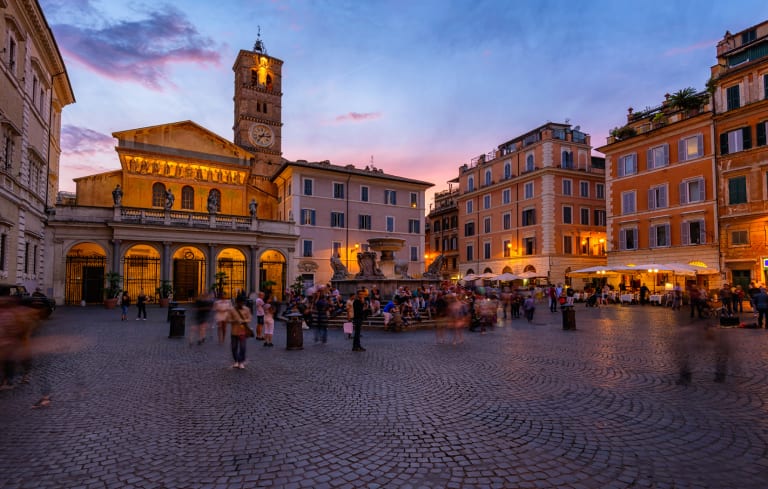
Trastevere is one of the most beautiful neighbourhoods in Rome and will give you a very authentic feeling as you walk through its cobbled streets. Here you will find typical shuttered windows, colourful buildings and vines hanging from every corner.
Take a stroll along the Tiber to the Tiber Island and discover its surroundings, stop by the charming Piazza di Santa Maria, and enter the Basilica di Santa Maria in Trastevere to admire its golden mosaics, one of the most surprising churches in Rome.
From Villa Farnesina, it's just a 20-minute walk to Piazza di Santa Maria in Trastevere. Book a tour of Trastevere and get to know Rome's most unique neighbourhood in depth.
Don't miss the sunset from the Gianicolo viewpoint
To end the day, you can relax with a glass of wine and a slice of pizza in Trastevere (I recommend trying the delicious pizza at Ai Marmi, on Viale di Trastevere, 53-59). Or...you can climb up to the Janiculum to enjoy the sunset over Rome, which is about a 15-minute walk from Piazza di Santa Maria in Trastevere.
Bring something to eat and drink and settle down on a bench to enjoy the views and the cool evening air. You can always return to Trastevere afterwards and enjoy the rest of the night.
Day 4: Visit Testaccio and a hidden spot in Rome

On your last day in Rome, don't miss some of the Italian capital's landmarks, such as the Pyramid of Cestius, the Pagan Cemetery, the Testaccio Market, Piazza Testaccio, the Orange Garden, the Lock of the Knights of Malta and, of course, the Circus Maximus.
Start the day at the Pyramid of Caius Cestius
Would you have guessed that you can see a pyramid in Rome? Well, yes, and one that has been magnificently preserved since ancient times.
This is the Pyramid of Caius Cestius, a Roman magistrate who ordered it to be built to house his burial chamber, in the style of the pyramids of Egypt.
You can see it as soon as you exit the Piramide metro stop on line B, but the best views are from the Non-Catholic Cemetery of Rome, the next stop on your itinerary on your last day in Rome.
Visit the non-Catholic cemetery
This beautiful pagan cemetery is unique in the city of Rome, and it is quite striking to find something like this in a city so important to Catholicism. The poets Percy Shelley and John Keats, who, as you know, were enamoured with Baroque Rome, are buried here.
It is a very peaceful place with a charming atmosphere from where you can see the Pyramid of Cestius in all its splendour. It is also a refuge for stray cats, and you will see many of them wandering among the gravestones of the cemetery.
Buy your souvenirs at the Testaccio Market and Piazza Testaccio
The Testaccio Market, unlike the Campo de' Fiori Market, is much more local and authentic, so you will find far fewer tourists who do not include this visit among their priorities on a trip to Rome.
The Testaccio Market has everything, stalls selling clothes, shoes and antiques, and of course lots of food stalls where I recommend you try some of the delicacies of Roman cuisine.
Take the opportunity to stroll around Piazza Testaccio, which is much less crowded than Rome's main squares, and rest before heading to one of the city's most impressive monuments: the Circus Maximus.
Don't miss the Circus Maximus
Although this is not an essential part of the itinerary, it is worth booking a guided tour of the Circus Maximus, especially if you are in the area. You can take the opportunity to stroll around the Circus Maximus, Rome's first stadium, where the famous chariot races were held. There are still some ruins of the palaces that were built around this site.
Today, it is a park where you can see the remains of antiquity and imagine what the shows that took place here would have been like. And now that you have cleared your mind after a day full of visits, get ready to discover one of the most special places in all of Rome.
Say goodbye to Rome at the Orange Garden and the Lock of the Knights of Malta

On the Aventine Hill, one of Rome's hills located south of the city, there is a place called the Giardino degli Aranci, or Orange Garden. It was originally an orchard belonging to Dominican monks, but today it is a park where you can find a door with a keyhole through which you can see a miniature version of the dome of St. Peter's Basilica.
It is a very beautiful and unique experience, and in reality, looking through the keyhole is just an excuse to stroll through the orange groves and enjoy their aroma, especially on a summer afternoon.
I recommend booking the Hidden Rome tour and coming up here an hour before sunset, even if it means cutting back on the time you spend on your previous visits: it is undoubtedly the best way to end your trip to Rome and one of the most impressive and beautiful views of Rome.