







More about: 3 Days in Rome
Although three days is not enough time to really get to know Rome, it is more than enough to see the most beautiful parts of the city and even stroll leisurely through its streets enjoying its unmistakable atmosphere. Here is the ideal itinerary for a 3-day trip to Rome, with tips and advice on how to see a lot in less time.
Day 1: Explore the Vatican and the Historic Centre
The best way to start visiting Rome is by visiting the city's most iconic sites. Prepare to be amazed right from the start of your trip!
Sistine Chapel
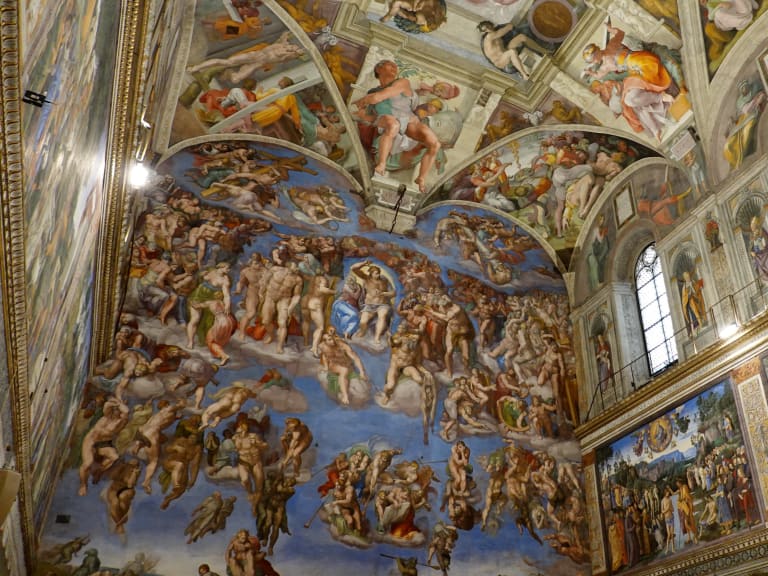
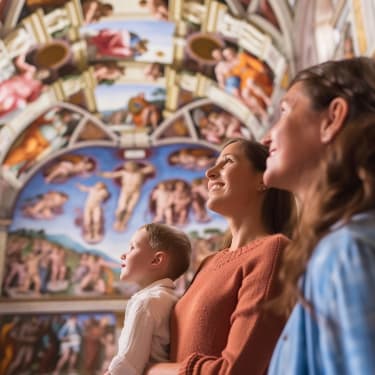
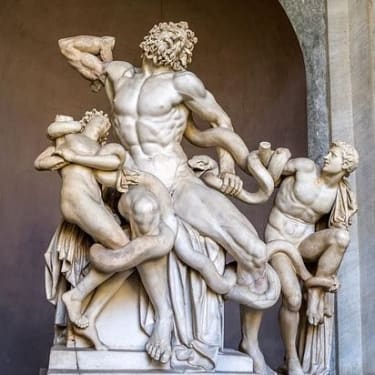
Vatican City is the first stop on the itinerary. Although technically you won't be in Rome during this visit, both the Sistine Chapel and St. Peter's Basilica could be enough to make a trip to the Eternal City unforgettable. The Sistine Chapel is part of the Vatican Museums, a museum that houses an overwhelming collection of religious and modern art, rooms dedicated to the exhibition of archaeological remains, and even a museum of papal carriages.
But let's get to the important stuff: to visit the famous chapel painted by Michelangelo, you have two options:
- Purchase your tickets for the Sistine Chapel.
- Take a guided tour of the Vatican Museums with an official guide who will tell you all about this place steeped in history.
And if you'll accept some more advice, I'll tell you that:
- It is best to visit the Sistine Chapel as early in the day as possible.
- It opens at 9 a.m. (every day of the week except Sundays).
St. Peter's Basilica

Leave the Vatican Museums and head to the majestic St. Peter's Square. To do so, follow these directions:
- Walk along Viale Vaticano until you turn right onto Via Leone IV.
- Continue along Viale dei Bastioni di Michelangelo.
- Then take Via di Porta Angelica until you see the columns lining the square.
- Look for the entrance and marvel at the spectacle that suddenly rises before your eyes.
When you arrive, there will be lots of tourists queuing to enter the temple, so it is highly recommended to book a guided tour of St. Peter's Basilica with an official guide to learn more about the history of everything you see inside.
This Renaissance marvel has a lot to see inside:
- The Baldacchino
- Michelangelo's Pietà
- The tomb of Alexander VII
- The Vatican Grottoes
- The dome of St. Peter's Basilica. Inside, you can see the frescoes and inscriptions that decorate it up close, and outside you will have incredible views of the Vatican and Rome.
One thing to keep in mind is that on Wednesdays, the basilica does not open until 1 p.m. due to the papal audience, a blessing given by the Pope himself to the faithful gathered in the square. It is also closed to the public on Sundays.
And remember: you will not be allowed into St. Peter's Basilica if your shoulders and knees are not covered, so avoid shorts, skirts, dresses and sleeveless tops.
Castel Sant'Angelo

It was originally built as a mausoleum for Emperor Hadrian almost two thousand years ago. Since then, Castel Sant'Angelo, on the banks of the River Tiber, has been a tomb, a fortress for the Pope in case of attack, a castle and, in our day, a museum.
Inside, you can see the papal apartments, Hadrian's mausoleum, and walk along the ramparts from which defensive cannons still point outwards. Best of all, you can climb up to the roof to enjoy views of Rome. On a three-day trip to Rome, I don't think it's absolutely necessary to explore the interior as part of your itinerary, but if it particularly appeals to you, you can find all the information you need here: Castel Sant'Angelo in Rome: Tickets and Tours.
Piazza del Popolo
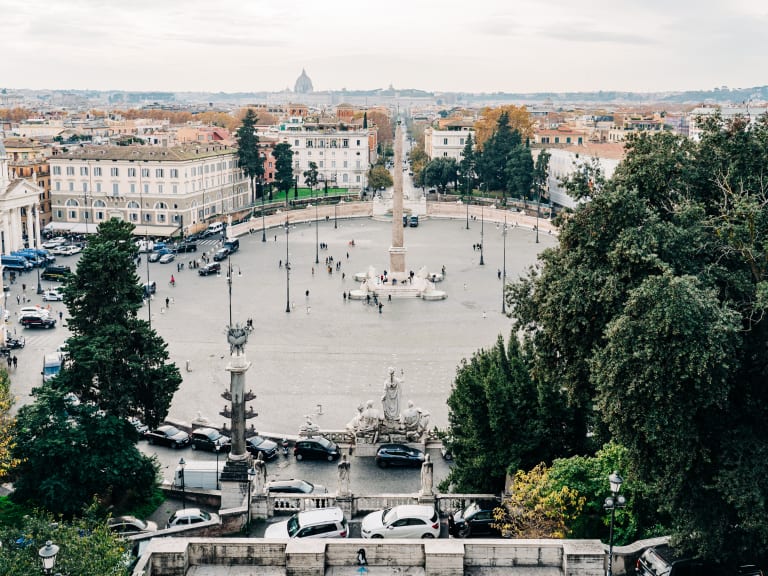
From Castel Sant'Angelo, you can take a pleasant stroll along the banks of the Tiber to Piazza del Popolo, the place where travellers once arrived in Rome. There is nothing better than booking a tour of Rome's squares and fountains to learn about its history and secrets.
In the centre of this square, you will see an Egyptian obelisk from the time of Ramses II, and on either side, the twin churches of Santa Maria in Montesanto and Santa Maria del Miracoli, located on both sides of Via Corso.
You can stop for a rest and then look for somewhere to eat. On recommendation, I went to Trattoria dal Pollarolo 1936, at Via di Ripetta, 4, and I really liked it. It's an unpretentious place, not touristy at all, where they serve authentic pizza and pasta, offering good value for money.
Piazza di Spagna
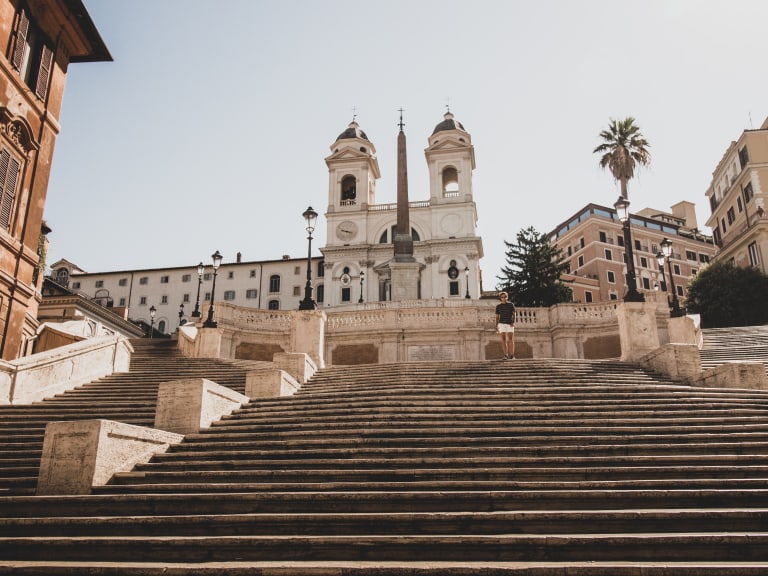
The afternoon visits are to the most beautiful and recognisable places in Rome. From Piazza del Popolo, walk down Via del Babuino and in less than 10 minutes you will reach Piazza di Spagna, whose main attractions are its famous steps, which lead to the beautiful church of Trinità dei Monti, and the Fontana della Barcaccia.
The staircase, which in spring and summer is filled with floral decorations and people, was the setting for Audrey Hepburn in the film 'Roman Holiday'. It's not just the Fontana di Trevi that is famous for appearing in a film! And speaking of which, it's the next stop of the day.
The Trevi Fountain
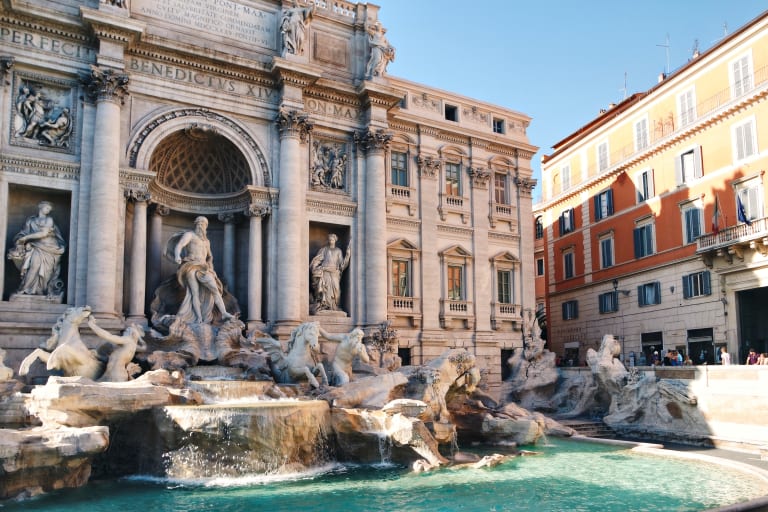
What a fantastic work of art. For its symbolism, for the elegance of its execution, for the magic of the place at dusk, for how much it has inspired artists from all over the world...
You will always find people in front of it or throwing coins into the water, following the tradition that says that throwing one coin will bring you back to Rome in the future, two coins will bring you Italian love and three coins will bring you marriage (or divorce). But you have to do it right: you have to throw the coin with your right hand over your left shoulder.
If you don't feel like encountering the Piazza di Trevi crowded to its four corners, you can visit the Fontana di Trevi at another time: either at dawn or after midnight, there will be very few people and these are two very special times to see this place.
The Pantheon
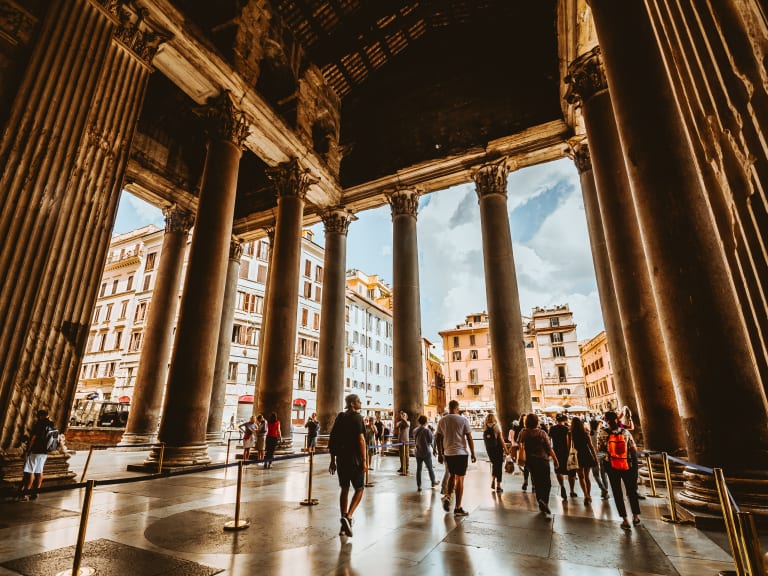
A short walk from the Trevi Fountain is Piazza della Rotonda, home to the incredible Pantheon of Agrippa (also known as the Church of Santa Maria Rotonda). It is the best-preserved building from Ancient Rome in the city, and although the exterior is impressive, the best part is inside, so booking a visit to the Pantheon is one of the must-do activities on your trip to Rome.
Going when there is still some light is a very beautiful experience, as the building has a spectacular dome with an oculus through which sunlight enters and reflects off the mosaics and statues housed in the Pantheon.
Originally built as a temple dedicated to the entire mythology of Roman gods, the Pantheon was converted for use as a Christian church in the early 7th century. Inside, you can see the tombs of some Italian monarchs and the tomb of the painter Raphael.
Day 2: Visit the monuments and ruins of Ancient Rome
You have already seen the most spectacular sights of Rome's Renaissance and Baroque periods, but you still have to discover its most notable monuments and delve deeper into the history of the Empire.
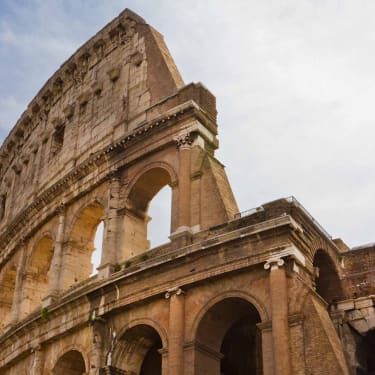
The Colosseum

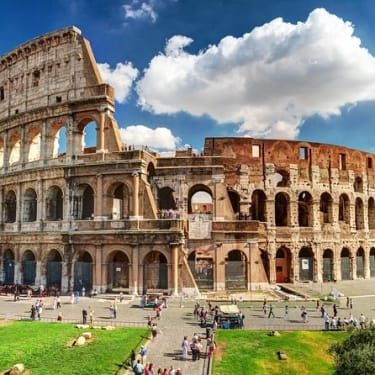
Built in ancient times as the ultimate venue for public spectacles, the Colosseum evokes images of gladiators fighting to the death in the arena. It is also an important place for Catholic worship, as it was here that the first Christians died for their faith.
It is one of the most popular places in Rome for tourists, so I recommend that you visit it first on the second day of your trip:
- To skip the queue and wait as little as possible, it is best to book your tickets for the Colosseum online.
- You can also take a guided tour of the Colosseum, which lasts about two and a half hours and allows you to access this monument directly and learn about its history from an expert guide.
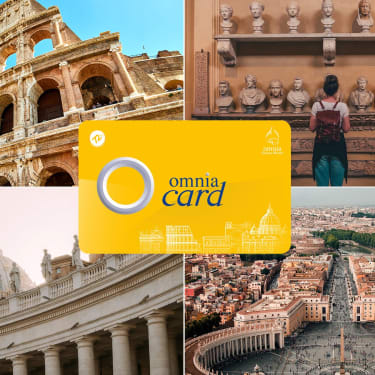
- Another option is to purchase the Omnia Card 72h - Roma Pass, as it includes admission to the Colosseum and other attractions, as well as a public transport pass for several days. In fact, this combination of cards is perfect for a 3-day trip to the Eternal City. Please note that even if you are using a tourist pass to access the Colosseum, you must reserve the date and time of your visit, which I recommend doing as soon as possible to ensure an early time slot.
Some other details you need to know are as follows:
- The Colosseum is open every day from 8:30 a.m. to 7:00 p.m.
- It is closed on 25 December and 1 January.
- It is located in Piazza del Colosseo.
- The best way to get there is to take the metro to the Colosseo stop on line B, although you can find out more ways to get there in the post How to get to the Colosseum in Rome.
The Roman Forum and Palatine Hill
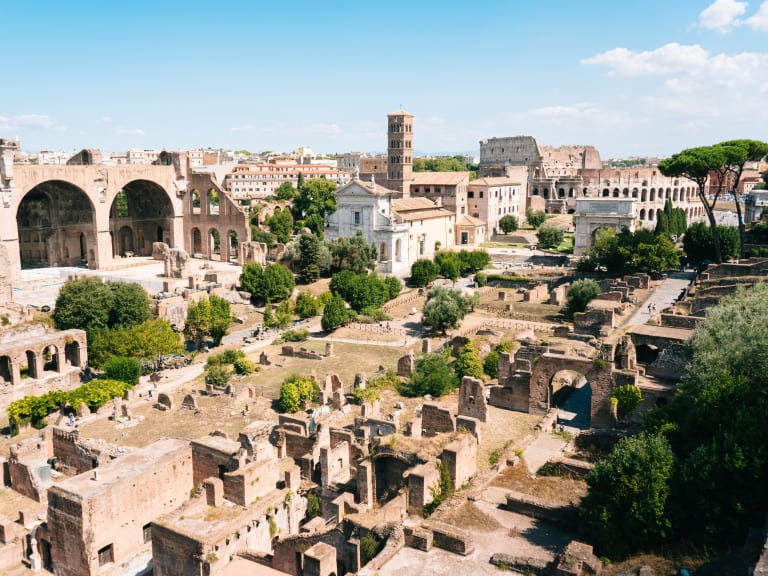
Next stop: a journey to the heart of ancient Rome! During the Empire, what is now known as the Roman Forum was the centre of public life in the city. There you will see the ruins of buildings dedicated to commerce and political life, and you can get an idea of what everyday life was like in ancient times.
Your ticket to the Colosseum also grants you access to the Roman Forum, located on the Palatine Hill, one of the seven hills of Rome, as long as you visit both sites on the same day (which is why I recommend visiting the Forum immediately after the Colosseum, wink wink, and also because they are very close to each other and the itinerary works out perfectly that way).
It is best to enter the Roman Forum via the Via di San Gregorio entrance, where there is less of a queue to get in, and exit through the gate closest to the Colosseum.
Baths of Caracalla
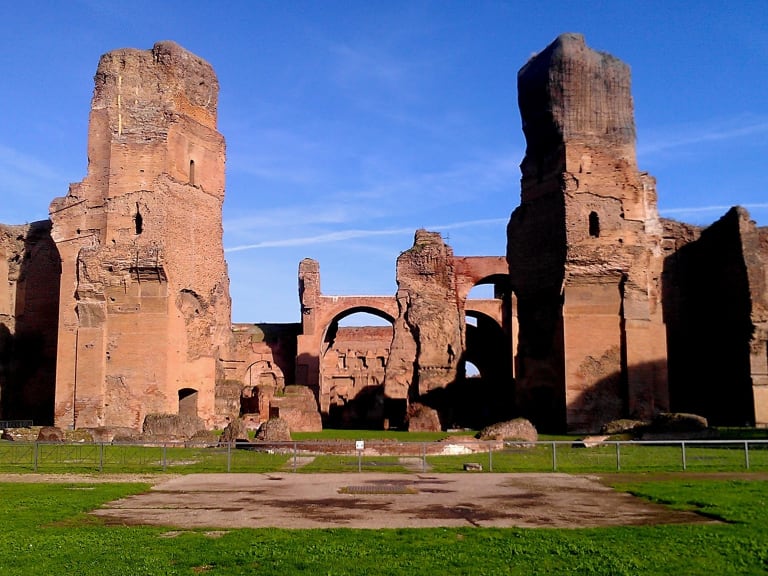
Although time has taken its toll on the baths, and their state of preservation is far from that of other sites such as the Colosseum or the Pantheon, a visit to the Baths of Caracalla is most interesting and I personally think that a stroll through these ruins has a very special charm.
You can imagine the hundreds of bathers who came to the Baths every day, spending the day in its gardens, its library, exercising and taking care of their hygiene. It is a building that truly represents the splendour of Ancient Rome like no other, as it is synonymous with having achieved a level of well-being (albeit reserved only for citizens) comparable to modern times.
The Baths of Caracalla are open every day of the year except 25 December. To get there from the Colosseum, walk down Via di San Gregorio, continue along Viale delle Terme di Caracalla and turn onto Via Antonina.
The Bocca della Verità
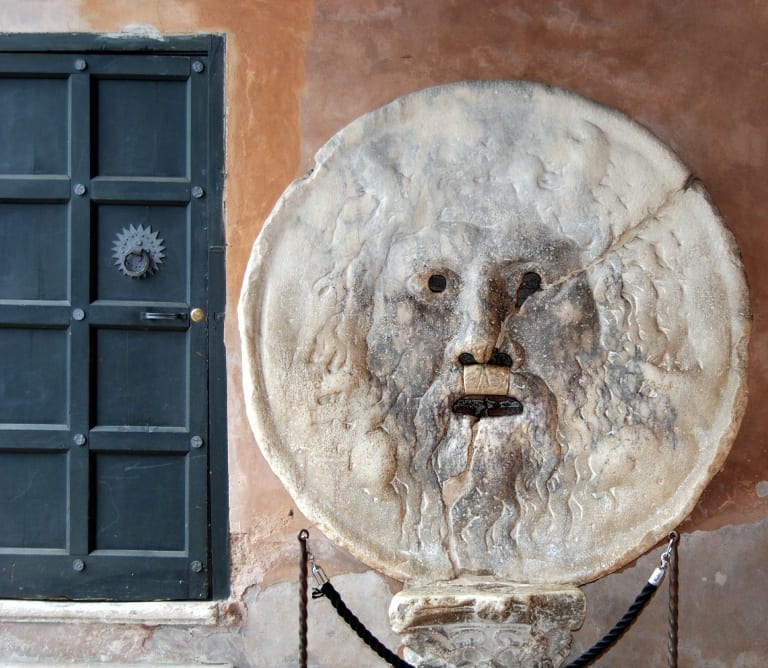
I haven't mentioned it before, but at this point, it's best to watch 'Roman Holiday' starring Audrey Hepburn and Gregory Peck before your trip, because in addition to the scene in Piazza di Spagna, the film's protagonists also visit the famous Bocca della Verità, the famous marble mask that, according to legend, bites the hands of liars.
It is located in Piazza della Bocca della Verità, which is right in front of Tiber Island, where the Church of Santa Maria in Cosmedin is located. Its interior portico houses the Bocca della Verità. The square is quite beautiful and in front of the church you can also visit a temple dedicated to Hercules and the Fountain of the Tritons.
To get there from the Baths of Caracalla, it is best to walk: retrace your steps to Via di San Gregorio and continue straight on Via dei Cherchi until you reach Piazza della Bocca della Verità.
Trastevere
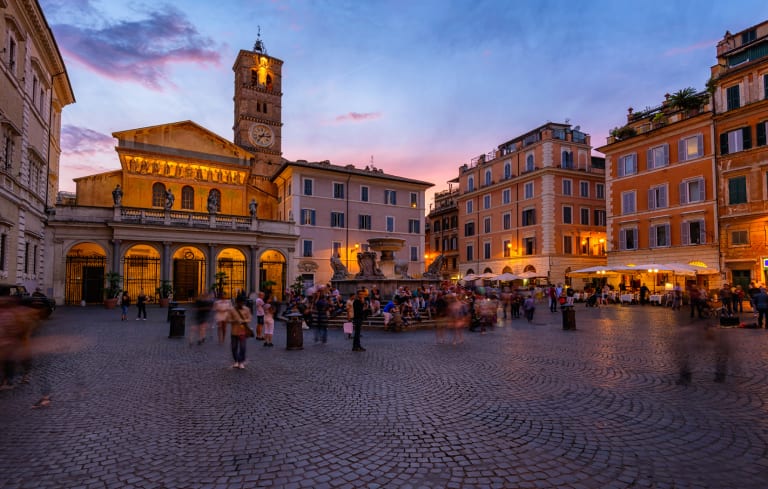
To end the day, the last visit is on the other side of the Tiber River: an old working-class neighbourhood that is now one of the most beautiful places in the city and a neighbourhood that has remained popular with both locals and tourists. In the cobbled streets of Trastevere, you will find charming buildings and corners and some of the best pizzerias in Rome.
I recommend taking a stroll around the area and visiting Piazza di Santa Maria in Trastevere (where one of Rome's most striking churches is located) and discovering the surrounding streets full of vines and charm. If you have time, hiring a tour of Trastevere to get to know it in depth is an excellent option.
A great place to have dinner is Pizzeria Ai Marmi, at Viale di Trastevere, 53-59. It's open until 2:30 in the morning, and you'll see lots of people eating pizza at the tables on the terrace or standing up, as the place is more like a kitchen than a restaurant. But there's a reason why it's always packed: their pizzas are to die for.
Day 3: Explore the history of Rome and venture into its Catacombs
To end your trip to Rome, the best thing to do is to get away from the centre and discover other parts of the city, including the secrets hidden beneath its streets and monuments.
Via Appia and the Catacombs

Built in 312 BC, it is one of the oldest roads in the world still in existence, which is fortunate as it allows us to appreciate its great importance to the Roman Empire in connecting the capital with the settlements in the south of the territory and facilitating the movement of troops and goods.
Much of what can be seen today on the Appian Way is the original stone used in its construction, and along the way you can see several places of interest in the Parco dell'Appia Antica, one of the 10 best parks in Rome.
Afterwards, you can visit the Catacombs of Rome. There are two that are open to the public:
- The Catacombs of San Callisto, which offer the longest tour and inside you can see the tombs of the first 16 popes, as well as the resting places of several Christian martyrs.
- The Catacombs of Saint Sebastian.
- In my opinion, the best option is to take a tour of the Catacombs of Rome.
After visiting the Catacombs, I recommend stopping for lunch. Ai Fienaroli, at Via Piemonte, 125, has a menu of exquisite dishes such as bluefin tuna tartare with crispy bread and fennel cream, sea bass carpaccio with pistachios and black truffle, and my favourite, Jewish-style artichokes. The price is higher than the other recommendations in this article, at around £35 per person.
Borghese Gallery

The Borghese Gallery, in the gardens of Villa Borghese, houses one of Rome's most impressive collections, with works by artists such as Raphael, Bernini and Caravaggio. It is open every day from 9 a.m. to 7 p.m., except on Mondays, when it is closed to the public.
There are several ways to explore the gallery, although the best option is to book a guided tour of the Borghese Gallery.
Once you have visited the Borghese Gallery, take a stroll through the gardens of Villa Borghese to see its finest sculptures and head west towards Piazza del Popolo. You will find the Terrazza del Pincio, a place where you can enjoy one of the best views of Rome, especially at sunset.
Piazza Navona
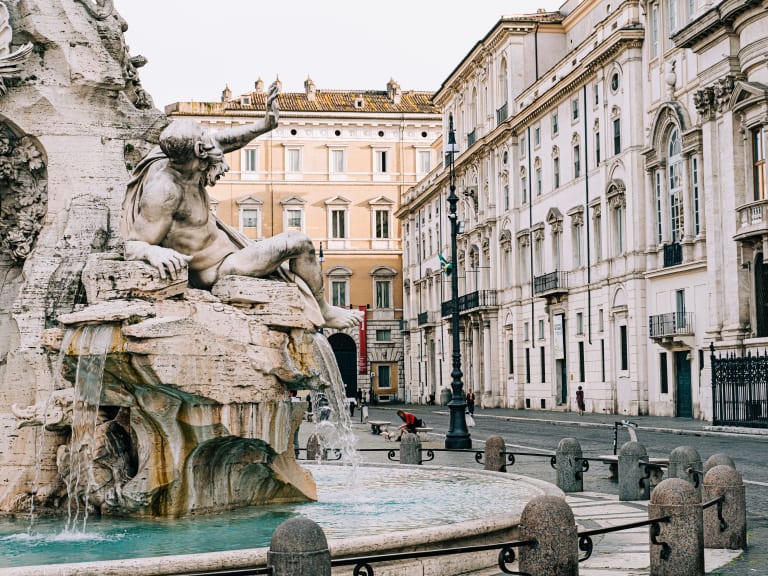
It's time to return to the centre and make one last stop at Piazza Navona, the city's main square, so you don't leave Rome without seeing it. Here you can see a wonderful trio of fountains and have a coffee or ice cream or sit down and rest from this day full of experiences. For me, this is one of the most beautiful squares in Rome.
As you have seen, visiting Rome in three days is possible if you know how to do it. Don't be afraid to include a large number of visits in a single day, as you have read, it is very easy to get from one place to another since the places of interest are very concentrated in the city centre. Now, enjoy your getaway!