

More about: 10 Best Things to Do in Quito
Quito is located at 2,850 metres above sea level between the Andes mountain ranges, very close to the equator. It is the oldest capital city in the Americas, with a well-preserved historic centre, and one of the most visited cities on the continent. This is partly due to its proximity to the Pichincha volcano and the equator.
There are many things to see and do in Quito, such as visiting old churches, climbing to viewpoints with panoramic views, swinging in a hammock at an altitude of 3,000 metres, discovering pre-Columbian art, exploring buildings steeped in legend, or setting foot in each hemisphere near the city. Here are some of the most interesting things you can do in the city, although there is much more to explore.
1. Visit the city's main square: Plaza Grande
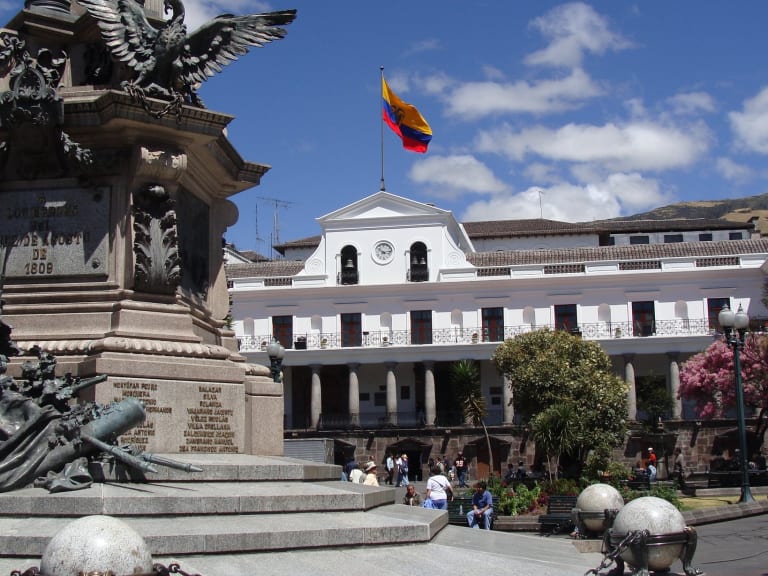
The Plaza Grande or Plaza de la Independencia is the most important square in Quito and the heart of its Historic Centre. Surrounding it are several of the city's most emblematic buildings: the Metropolitan Cathedral, the most important in Ecuador; the Carondelet Palace, which is the official residence of the president; and the Archbishop's Palace.
The square is home to the Independence Monument, which was built in honour of the heroes who led Ecuador's "First Cry of Independence" in 1809. The origins of the square date back to 1500, when it used to have a water fountain in the centre, right where the monument stands today. The square is one of the city's must-see attractions and is included in all guided tours of Quito.
- Location: Av. Venezuela between Chile and Espejo. Historic Centre of Quito.
Metropolitan Cathedral
The Metropolitan Cathedral is the oldest church in South America, built between 1562 and 1567. It showcases the convergence of indigenous and Spanish art, as well as various architectural styles. It has a museum exhibiting works of art, paintings and sculptures from the Quito School of Art.
- Opening hours: Monday to Saturday and public holidays from 9 a.m. to 5.30 p.m., and Sundays from 10 a.m. to 2 p.m.
- Admission fee: around €4.
Carondelet Palace
This is the official residence of the president, which is not the actual seat of the presidency. Guided tours are usually available by prior reservation, during which you can look out from the presidential balcony. But the most interesting thing is to see the Granaderos de Tarqui, in their traditional costumes, who guard the entrance to the palace.
It is very popular in the city to go and see the Changing of the Guard, which takes place every Tuesday at 12 noon and involves horses decorated with pompoms, drums, marching soldiers and the singing of the national anthem.
Archbishop's Palace
The Archbishop's Palace is one of the oldest in Quito, dating back to the 16th century. Although the bishop's offices are located inside, its courtyards and balconies also feature craft shops and restaurants with a privileged view of the square.
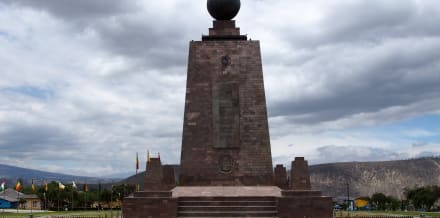
2. Experience latitude 0 at the Mitad del Mundo Monument

One of the most popular things to do near the city is to visit the Mitad del Mundo Monument, which is why many people take a transfer from the airport to Quito. It is a place where you can stand with one foot in each hemisphere or check out experiments related to Latitude 0.
The Mitad del Mundo Monument is located about 28 km from the city centre, and you can get there by taking the Mitad del Mundo bus or booking a tour of Quito, as most tours include a visit to this monument. The site has museums, exhibition halls and restaurants, and events and concerts are held there every weekend.
Apparently, the equator does not actually pass through the monument, but 200 metres away, at the Intiñán Solar Museum. You can take advantage of your visit to see this museum and learn about the astronomy and culture of the native inhabitants of South America.
Details of interest
- Location: Mariano Calvache E18-94 y, Quito 170135.
- Opening hours: Monday to Friday from 9 a.m. to 5 p.m.; Saturdays, Sundays and public holidays from 9 a.m. to 6 p.m.
- Admission: approximately €5 for adults and around €2.50 for children.
3. Discover La Mariscal Craft Market
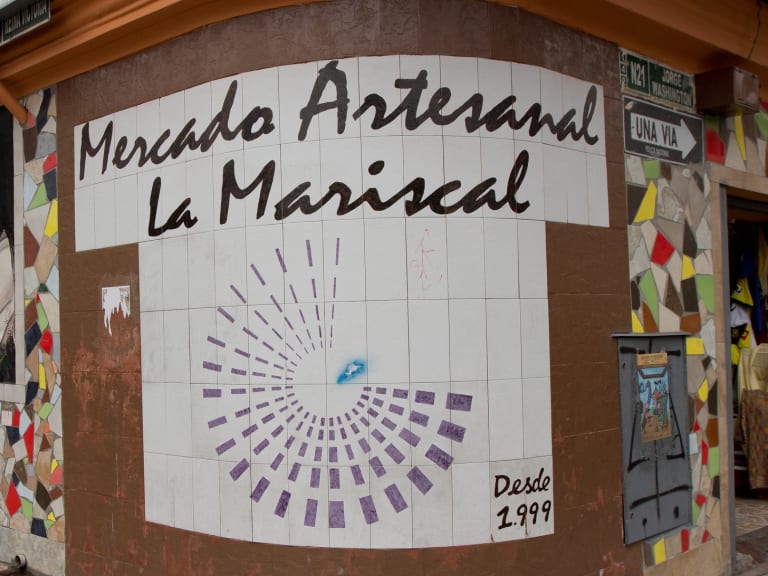
One of the most visited places in Quito is La Mariscal Market, where you can find a wide variety of handicrafts such as paintings, woven and embroidered garments, tapestries, jewellery, musical instruments such as quenas and ocarinas, and even Panamanian hats, which actually originate from Ecuador.
It is one of the main handicraft markets in the country, located about 3 km from the Plaza Grande. It has about 200 shops selling handmade products, many of which are made using ancient indigenous techniques. It is the ideal place to buy typical Ecuadorian handicrafts.
Another popular market near Quito is the Otavalo Market, considered one of the best in South America. You can get there by bus in about two hours to the city of Otavalo, or book a tour from Quito, which will also take you to see many natural attractions in and around the city, such as the Cuicocha lagoon.
Details of interest
- Location: Jorge Washington 611, Quito 170143.
- Opening hours: Monday to Saturday from 8 a.m. to 6 p.m., and Sundays from 9 a.m. to 5 p.m.
4. Discover the legendary Church of San Francisco

The Church of San Francisco, built in the 16th century, is considered the largest religious architectural complex in the Americas. It covers two city blocks and includes chapels, temples, a convent, and an important Franciscan library.
The church, which was consecrated to San Francisco, consists of 13 cloisters, a high altar and the library. Inside, it houses some 3,500 works of art from the Quito School, which developed between the 16th and 18th centuries. Among them is the 18th-century Virgin of Quito, which is a symbol of the city.
The façade features striking Inca representations of the sun, which were intended to attract Native Americans to the church. During your visit, you can explore the Plaza de San Francisco and the church's catacombs, which now house a craft market.
The church has also gained prominence in the city's culture due to the legends that are told about it. It is said that the church was built by an army of imps, as Cantuña, an indigenous man who was commissioned to build it, made a pact with the devil to build the complex in a short time.
Interesting details
- Opening hours: Monday to Saturday from 7 a.m. to 12 p.m. and from 3 p.m. to 5.30 p.m. Sundays from 7 a.m. to 12 p.m.
- Entrance fee: around €3 per person.
5. Be dazzled by the Church of the Society of Jesus
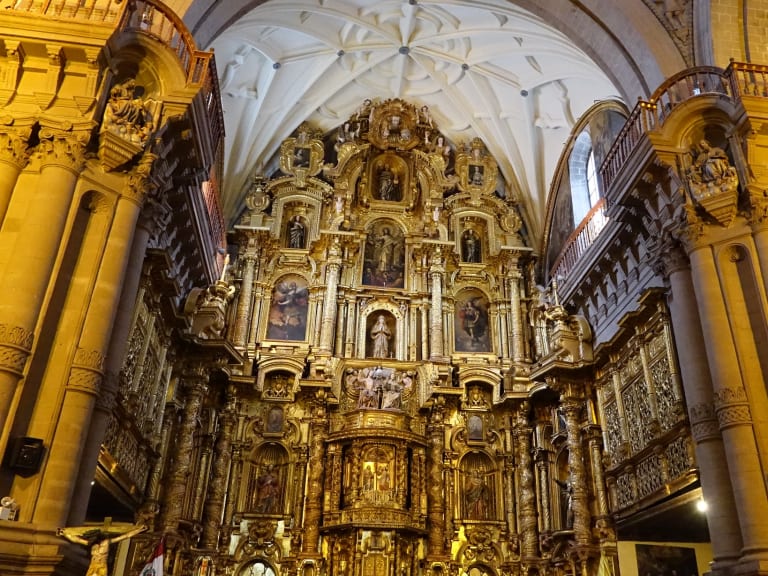
The Compañía de Jesús Church is one of the most visited churches in Quito due to its gleaming interior, which is almost entirely covered in 23-carat gold leaf. It is a 17th-century Baroque church with a façade made of volcanic stone. It was built by the Jesuits, who were inspired by two Roman Jesuit temples: Il Gesú and San Ignacio.
The walls of the church were carved by artists from the Quito School, who turned it into a true jewel of the city. It is estimated that the church contains a tonne of gold. This would have been contributed by the indigenous people who wanted to ensure that their children could attend the Jesuit university that was later built.
The Compañía de Jesús Church is Baroque in style, with a mixture of other styles such as Mudejar and Neoclassical. Inside, two large canvases stand out, The Last Judgement and Hell, which were painted by Hernando de la Cruz in 1620.
If it coincides with the date of your visit, bear in mind that the museum offers free guided tours on the first Sunday of each month.
Details of interest
- Location: García Moreno N10-43, Quito.
- Opening hours: Monday to Thursday from 9.30am to 6.30pm, Fridays from 9.30am to 5.30pm, Saturdays and public holidays from 9.30am to 4pm and Sundays from 12.30pm to 4pm.
- Admission fee: around €5 per person. It costs an extra €3 to go up to the domes.
6. Take a ride on the Quito cable car

One of the best things to do in Quito is to take a ride on the cable car at an altitude of 4,000 metres to see the city and the surrounding mountainous landscape. Quito is a city located at a high altitude (2,850 metres above sea level) and was built on one of the slopes of the Andes mountain range.
The cable car departs about 5 km from Quito's historic centre and takes you to the top of Cruz Loma hill. The journey takes about 20 minutes, and once at the top you can go hiking, cycling or climbing, and take the best photos. A very popular trail is the one that takes you to the Pichincha Volcano, which is about 10 km long.
Don't miss the swings, where you can experience a bit of vertigo. At the top, you will also find the Ermita de la Dolorosa chapel and a small shopping centre. On the way down, you can visit Vulqano Park, an amusement park with games for children and adults.
Recommendations for riding the TeleferiQo
The Quito cable car, or TeleferiQo, is considered the highest in South America. Bear in mind that you may experience altitude sickness at the top, so it is advisable to take coca leaves to chew, sweets or tablets. That is why, on 3-day stays in Quito, it is usually done on the second or third day, so that you can acclimatise to the altitude. Remember to take enough warm clothing.
Details of interest
- Location: Fulgencio Araujo, Quito 170527.
- Opening hours: Monday to Friday from 9 a.m. to 6 p.m., and weekends from 9 a.m. to 8 p.m. The descent time is at 7 p.m.
- Ticket price: approximately €9 for adults and around €7 for children under 18. Pets can ride for a fee of €5. The cost of taking a bicycle is approximately €5.
- How to get there: the bus takes you to the base of the cable car in about an hour from the historic centre of Quito. By car, it takes about 15 minutes.
7. Enjoy the views at El Panecillo
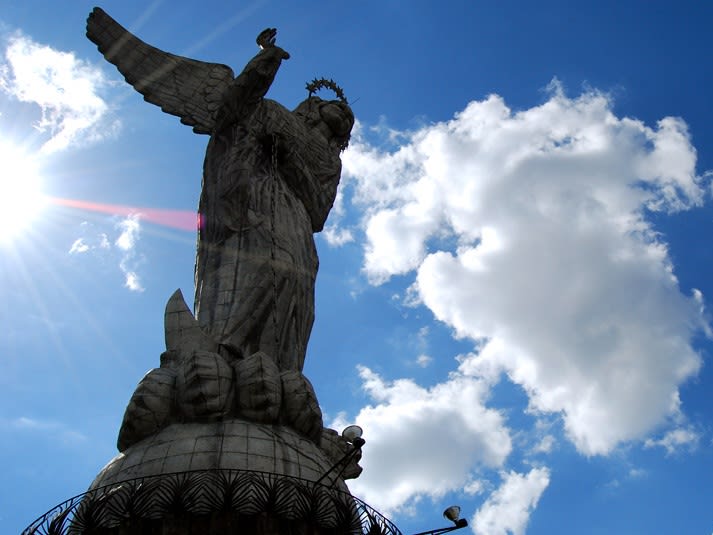
El Panecillo is a hill located in the centre of Quito that offers one of the best views of the city. It is famous for the Virgen del Panecillo (Our Lady of the Bread Roll) statue at the top, which is made entirely of aluminium. It is about 30 metres high and is considered the tallest aluminium statue in the world.
The hill is located south of Quito, about 2 km from the Plaza Grande. You can get there by bus in about 40 minutes or by car in 15 minutes. It is possible to walk to the top of the hill, but keep in mind that the path is not very safe. Another option is to book a tour, as it is an attraction that is included in most guided tours of Quito.
The hill's viewpoint, which you reach via narrow stairs, offers one of the best views of the city and the volcanoes that surround it. From the heights, you can see many of the city's historic buildings, such as the Church of San Francisco and the Metropolitan Cathedral. There are also craft shops, places to buy food, and a small museum at the base of the statue.
The Virgin of El Panecillo is a replica of the Virgin of Quito, which is located on the main altar of the Church of San Francisco. It was made by Bernardo de Legarda in 1734. In addition, the hill used to be a sacred place for the native inhabitants of these lands, and there are many legends about it due to the tunnels in the hill.
Interesting details
- Location: Fulgencio Araujo, Quito 170527.
- Opening hours: open all day. The museum is open Monday to Friday from 9 a.m. to 6 p.m. and closes one hour earlier on weekends.
- Admission fee: free. Admission to the museum costs around €2 per person.
8. Explore the city's most interesting museums
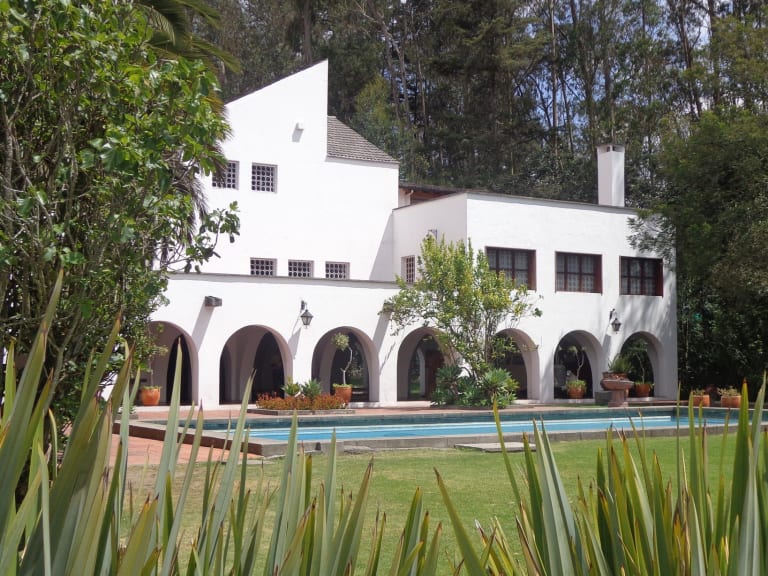
During your visit, don't miss out on visiting Quito's best museums, especially if you're interested in learning about its history, art and culture. Some of the most recommended museums are the Pre-Columbian Art Museum and the Casa Guayasamín Museum, dedicated to the work of this artist.
At the Casa Alabado Pre-Columbian Art Museum, you can see paintings, sculptures, replicas of architecture and other objects that belonged to the ancient inhabitants of this region. It is located about five blocks from Plaza Grande. There are several 30-minute guided tours (plus 30 minutes of free time) that you can take, which cover specific topics.
The Casa Guayasamín Museum used to be the home of the renowned Ecuadorian artist Oswaldo Guayasamín, which has now been converted into a museum. In addition to the artist's works, you can see the pre-Columbian and colonial art objects he collected. It is located about 7 km from Plaza Grande. Additionally, very close to the Casa Guayasamín Museum is the Museum of Man, which the artist built in honour of human beings.
Casa Alabado Pre-Columbian Art Museum
- Location: Cuenca N1-41, Quito 170401.
- Opening hours: Wednesday to Sunday from 9 a.m. to 5.30 p.m.
- Admission fee: approximately €6 per person for guided tours.
Guayasamín House Museum
- Location: Mariano Calvache E18-94, Quito 170135.
- Opening hours: Monday to Saturday from 9.30 a.m. to 4.45 p.m.
- Admission fee: approximately €10 per person for guided tours.
9. Explore Itchimbía Park and Viewpoint
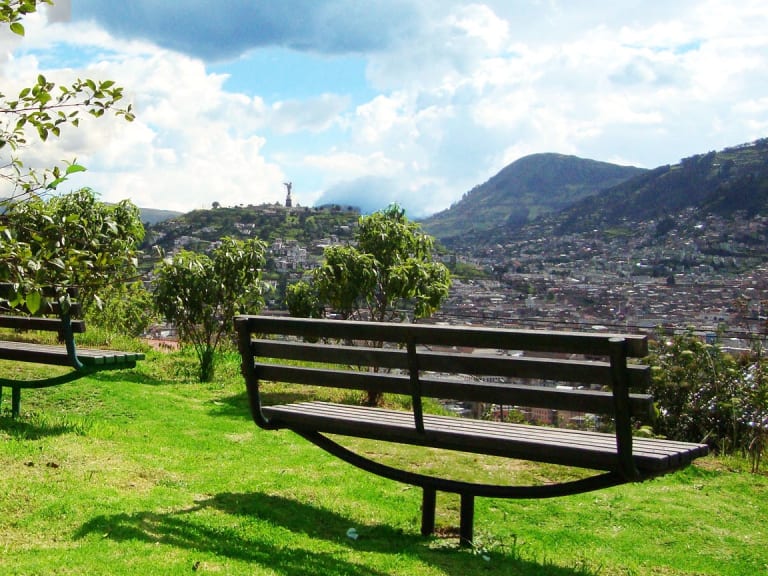
Itchimbía Park is located west of the Historic Centre, at an altitude of approximately 2,910 metres. It is a green space covering some 54 hectares, with sports fields, running and cycling tracks, and children's playgrounds.
From the park's viewpoint, you can see the historic centre of Quito, El Panecillo, which is another of the city's main viewpoints, and the surrounding neighbourhoods. You can also see the mountain range and volcanoes surrounding the city, especially on sunny days.
In addition to enjoying the park's nature and views, you can visit the Itchimbía Cultural Centre, also known as the Crystal Palace, where you can see exhibitions, listen to live concerts or participate in cultural activities. The building, whose walls are made of glass, was restored from an old iron structure that used to be a market.
The park also features a sign with the city's name on it, which is a popular spot for taking photos. There are also restaurants and bars in the park where you can recharge your batteries before continuing your tour while enjoying the beautiful view of the place.
Details of interest
- Location: QGH2+39C, Quito 170136.
- Opening hours: every day from 5 a.m. to 6 p.m., closing one hour earlier on weekends.
- Entrance fee: free.
- How to get there: from Plaza Grande, it is a half-hour walk or half-hour bus ride.
10. Discover La Ronda Street
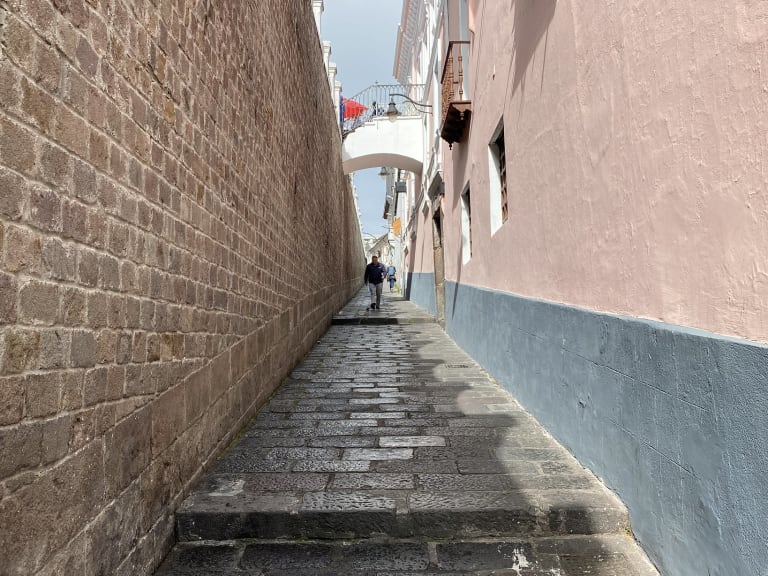
La Ronda Street is a traditional street in Quito's Historic Centre, lined with craft shops, literary cafés, bars and restaurants. It is a cobbled alleyway with a slope, where you can try typical local dishes and learn more about the city's culture.
The street is actually called Juan de Dios Morales, and it stretches from the old Cumandá Terminal to Boulevard 24 de Mayo. The street comes alive especially after sunset, when the lighting transports you to another era, and live music can be heard in many places. That is why it is one of the places visited during night-time gastronomic tours.
Among the highlights you can see on this street are the Casa de las Artes de La Ronda and Casa 707, where art exhibitions and concerts are held. You can also visit the Capilla del Robo, which was built on the site where objects stolen from the Santa Clara convent were found, a robbery that shocked the city and about which many legends are told.
La Ronda Street is a good place to try typical Quito dishes such as morocho empanadas or empanadas de viento, and drinks such as canelazo, made with cinnamon and liqueur, or fruit wine.
Details of interest
- Location: QFGP+87W, Venezuela, Quito 170130, Ecuador.
- Opening hours: bars, restaurants and nightclubs are open every day from 3pm to midnight. Shops are open from 10am to 6pm.
- Entrance fee: free.